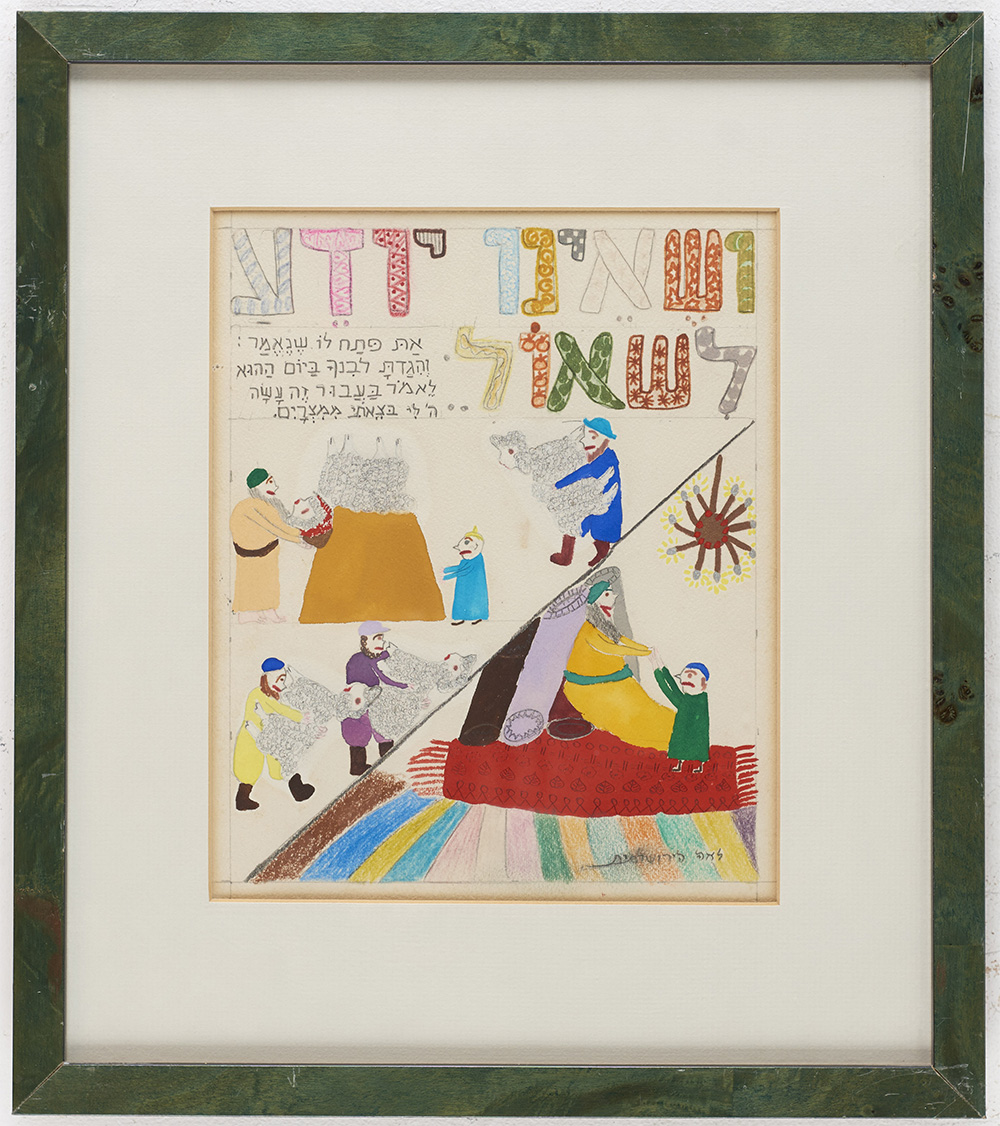
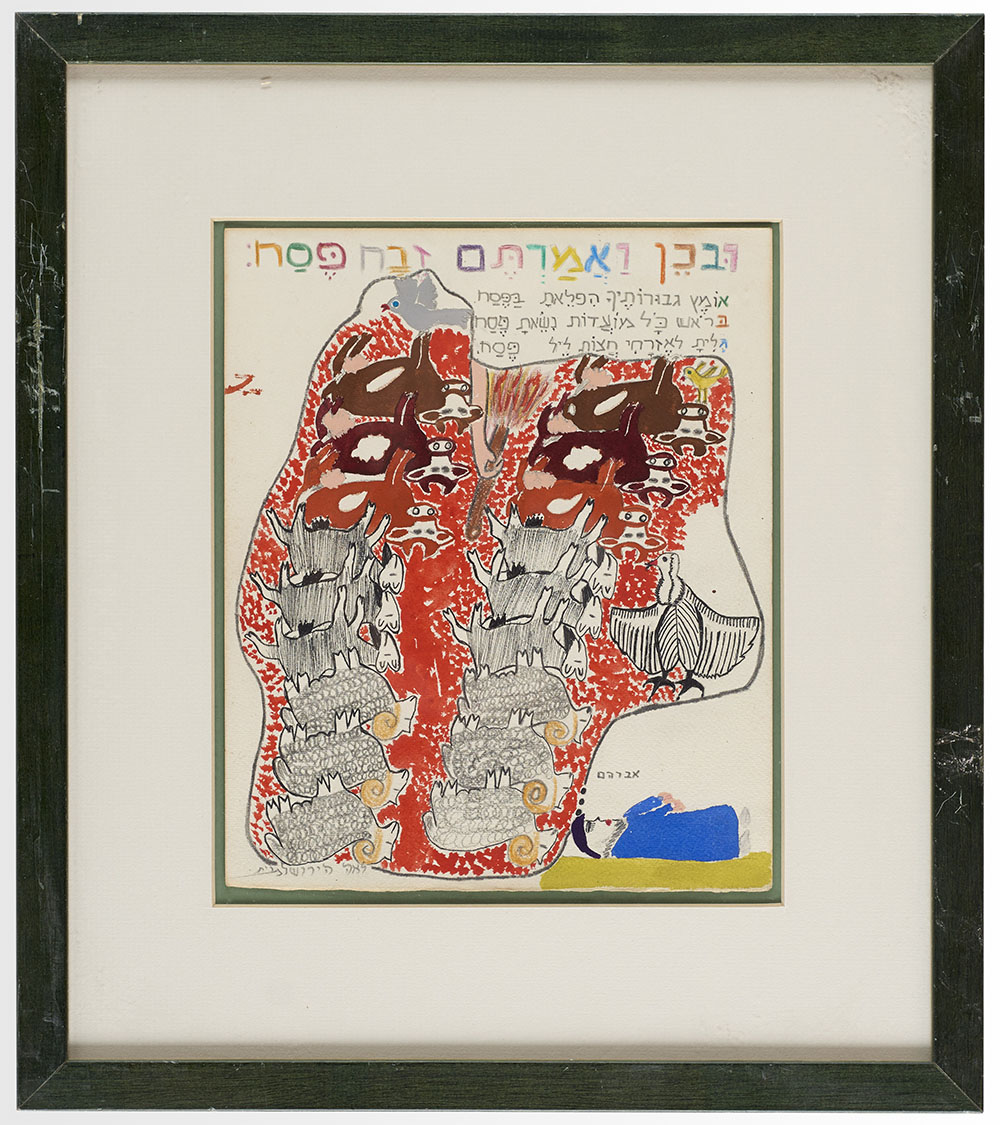
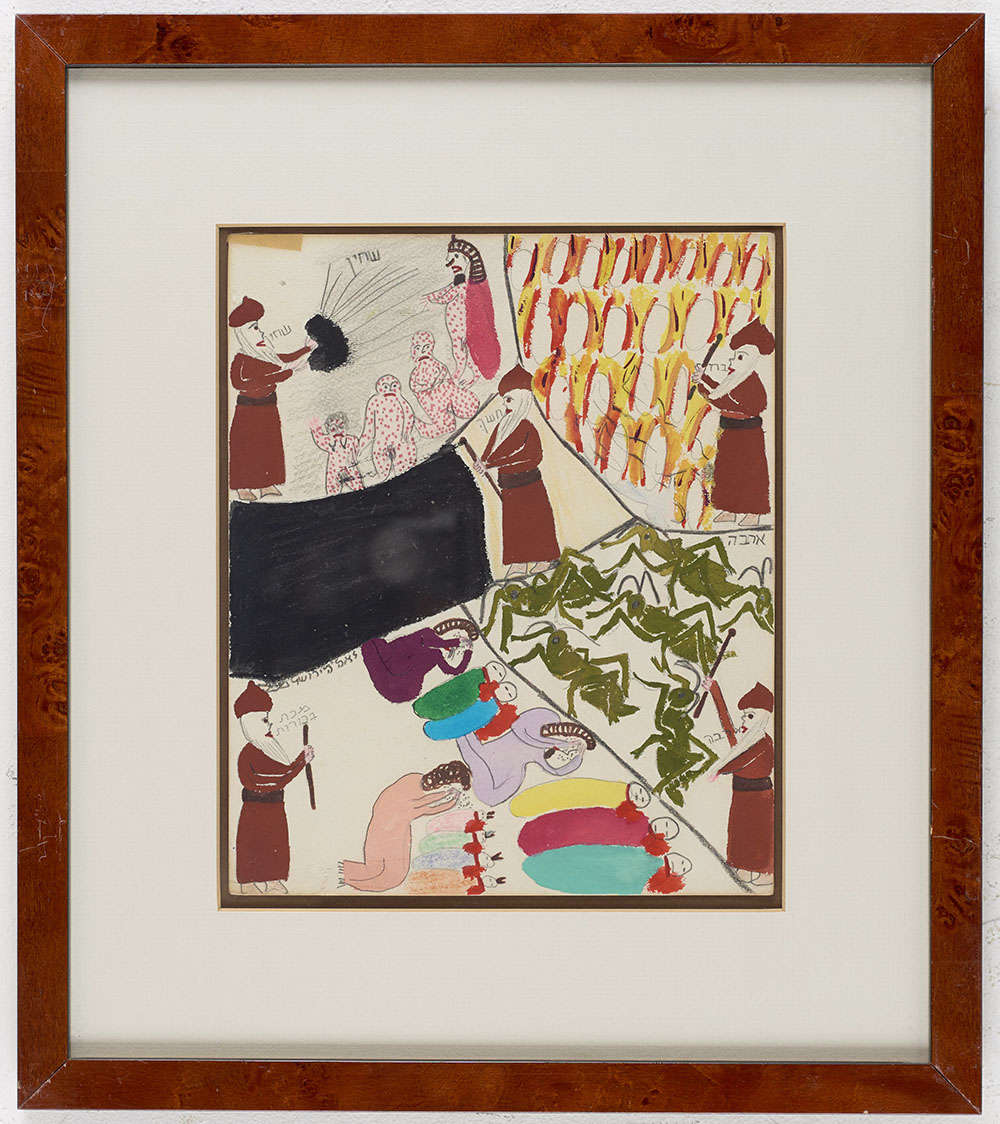
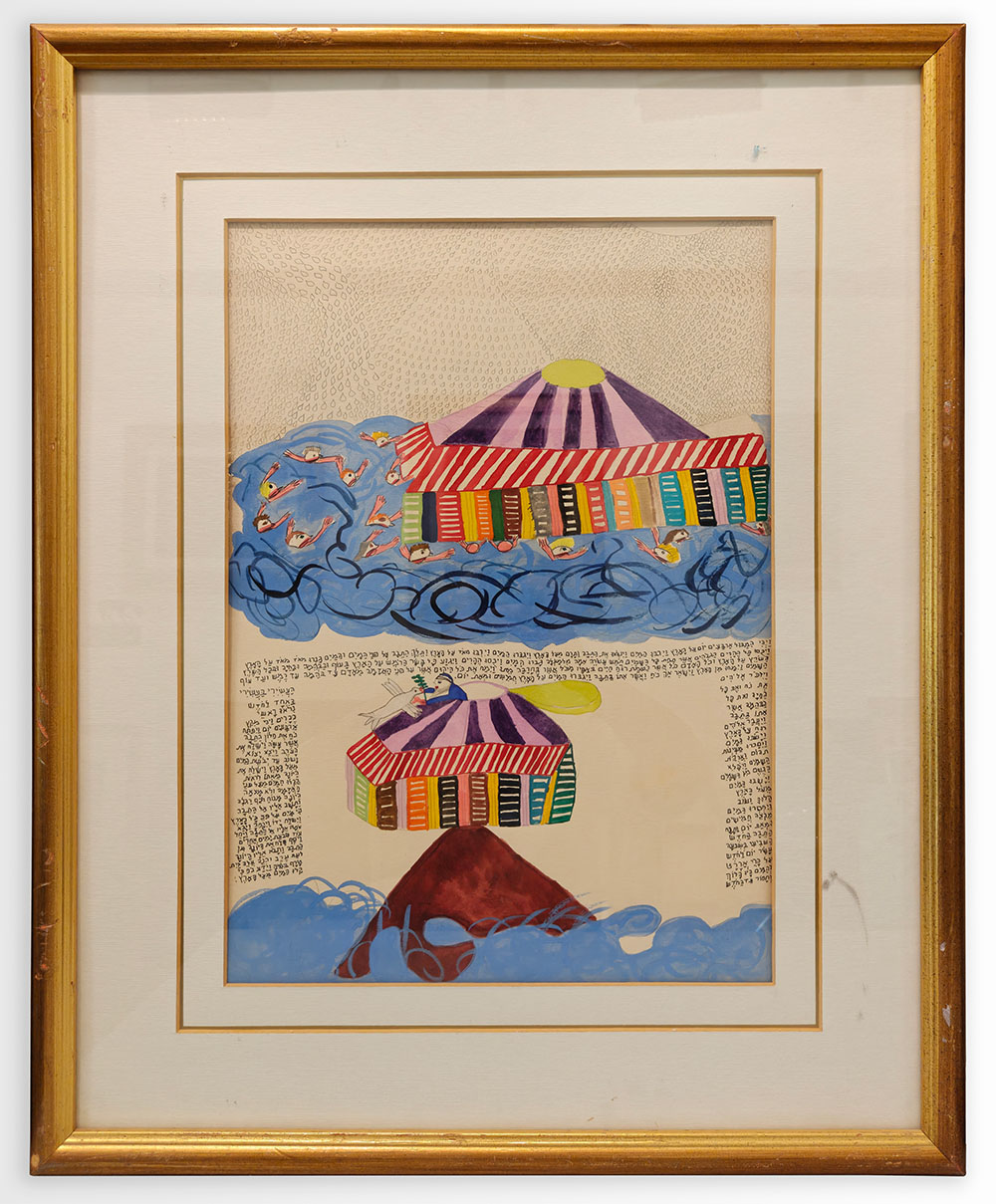
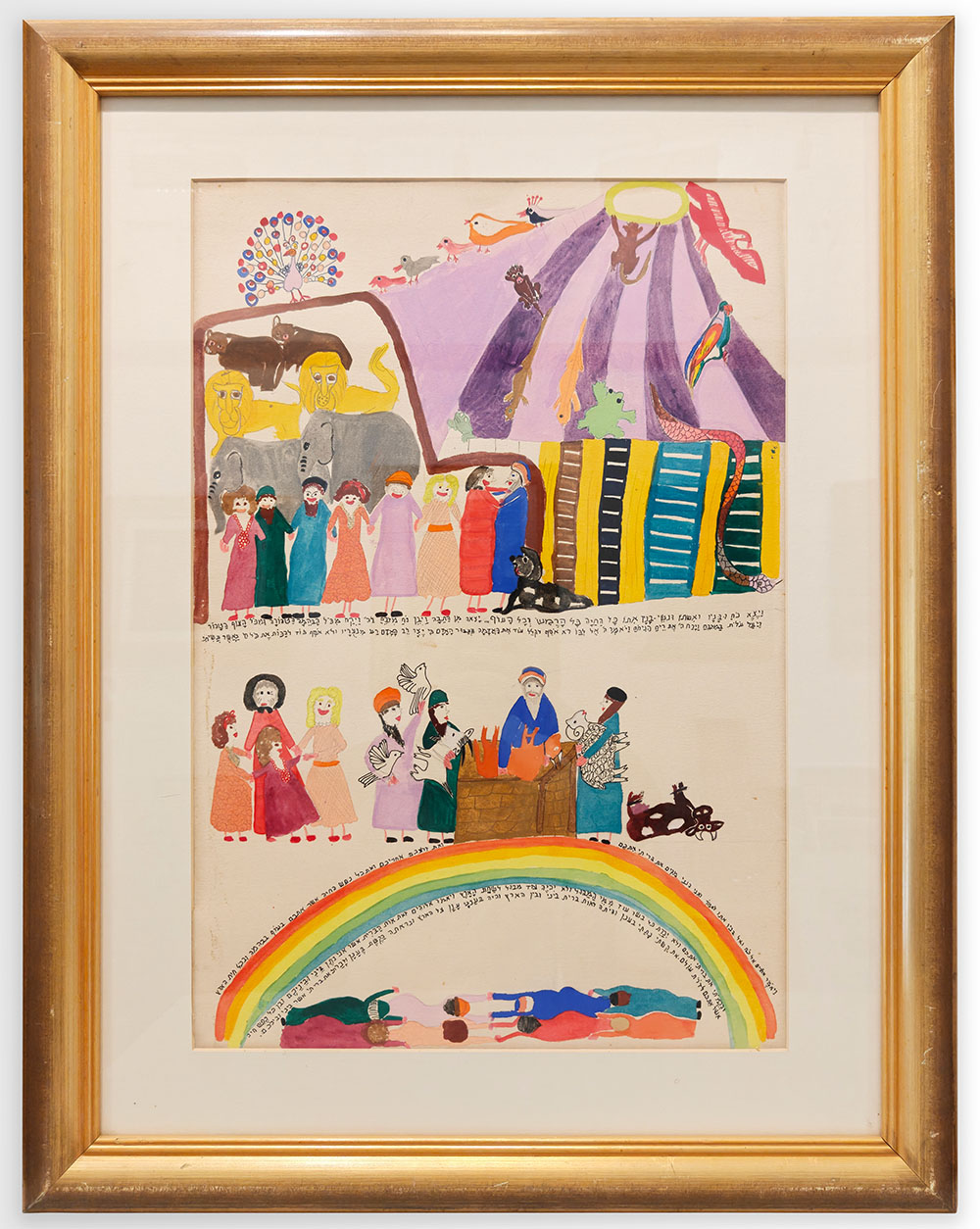
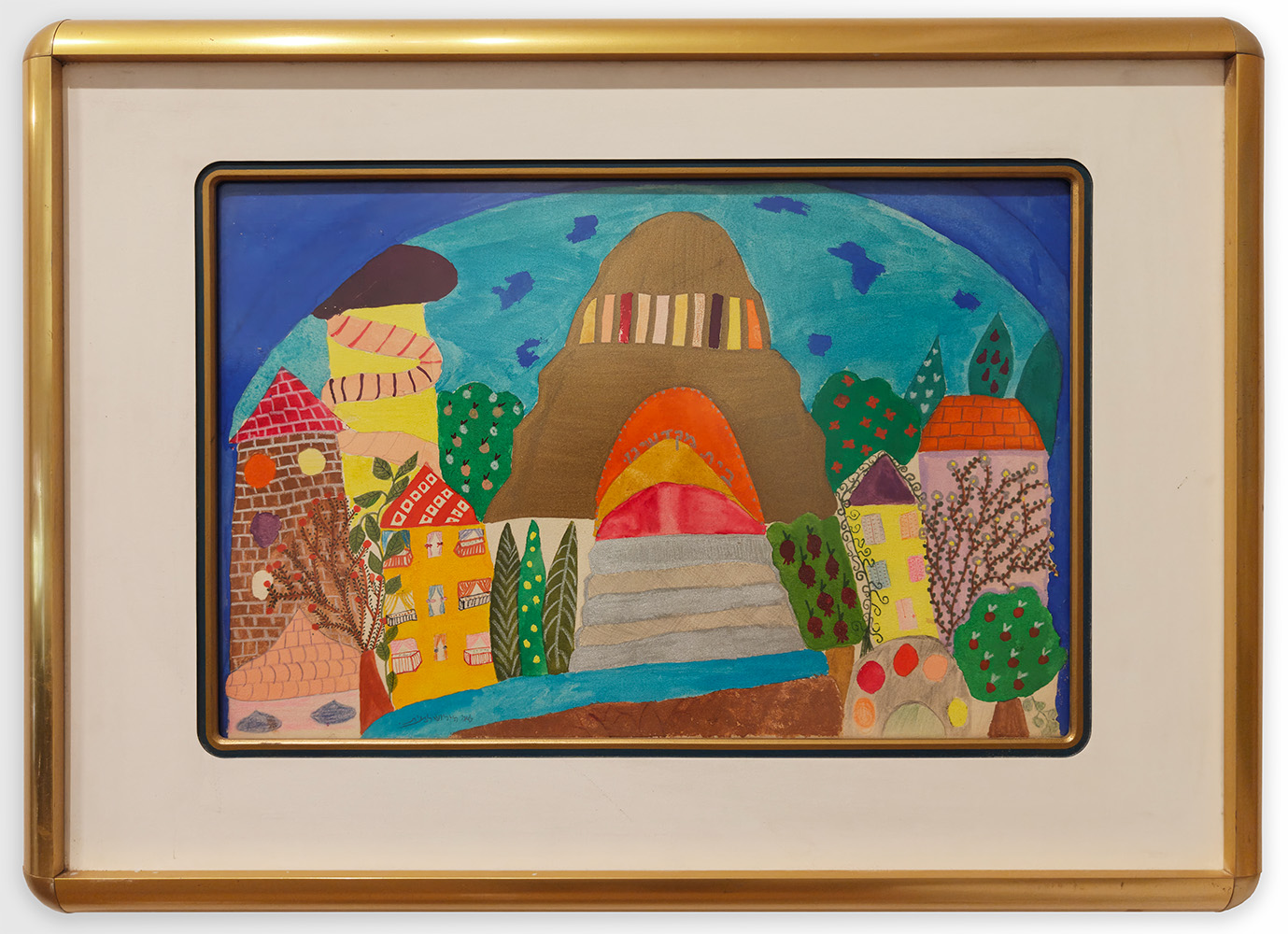
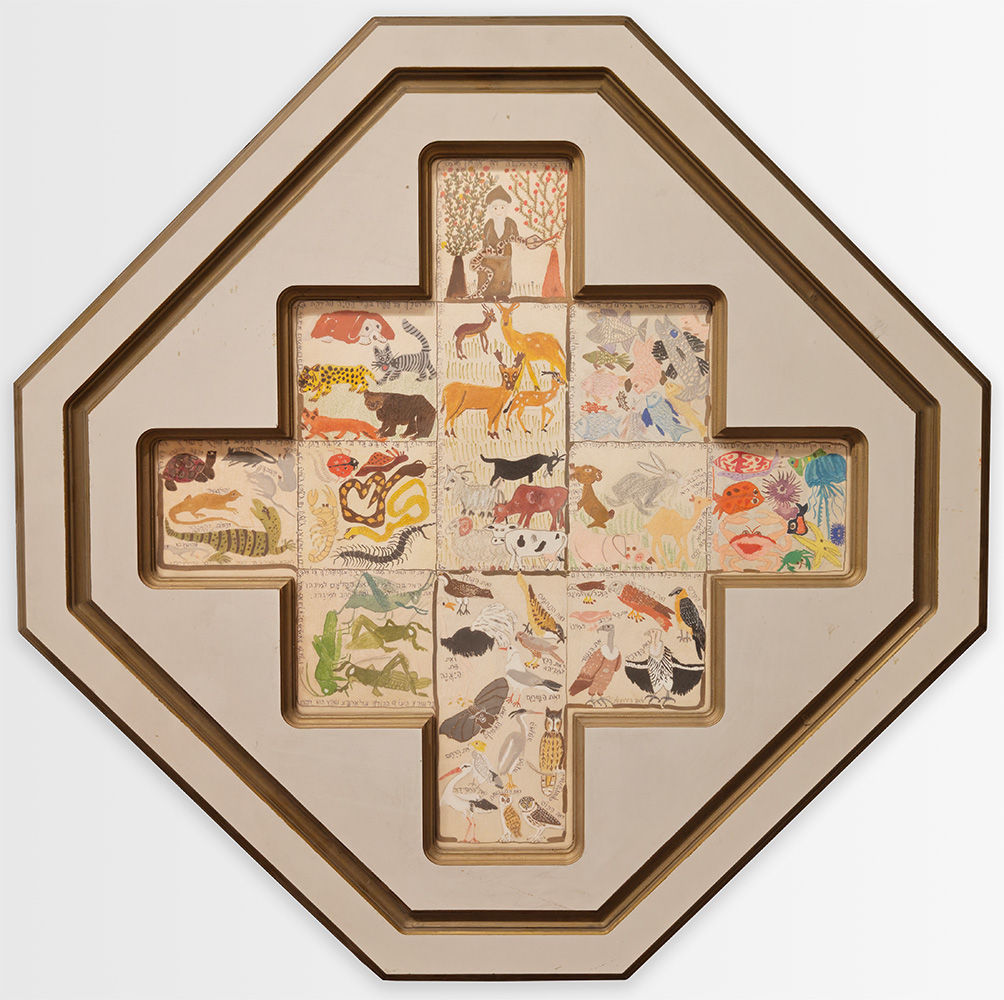
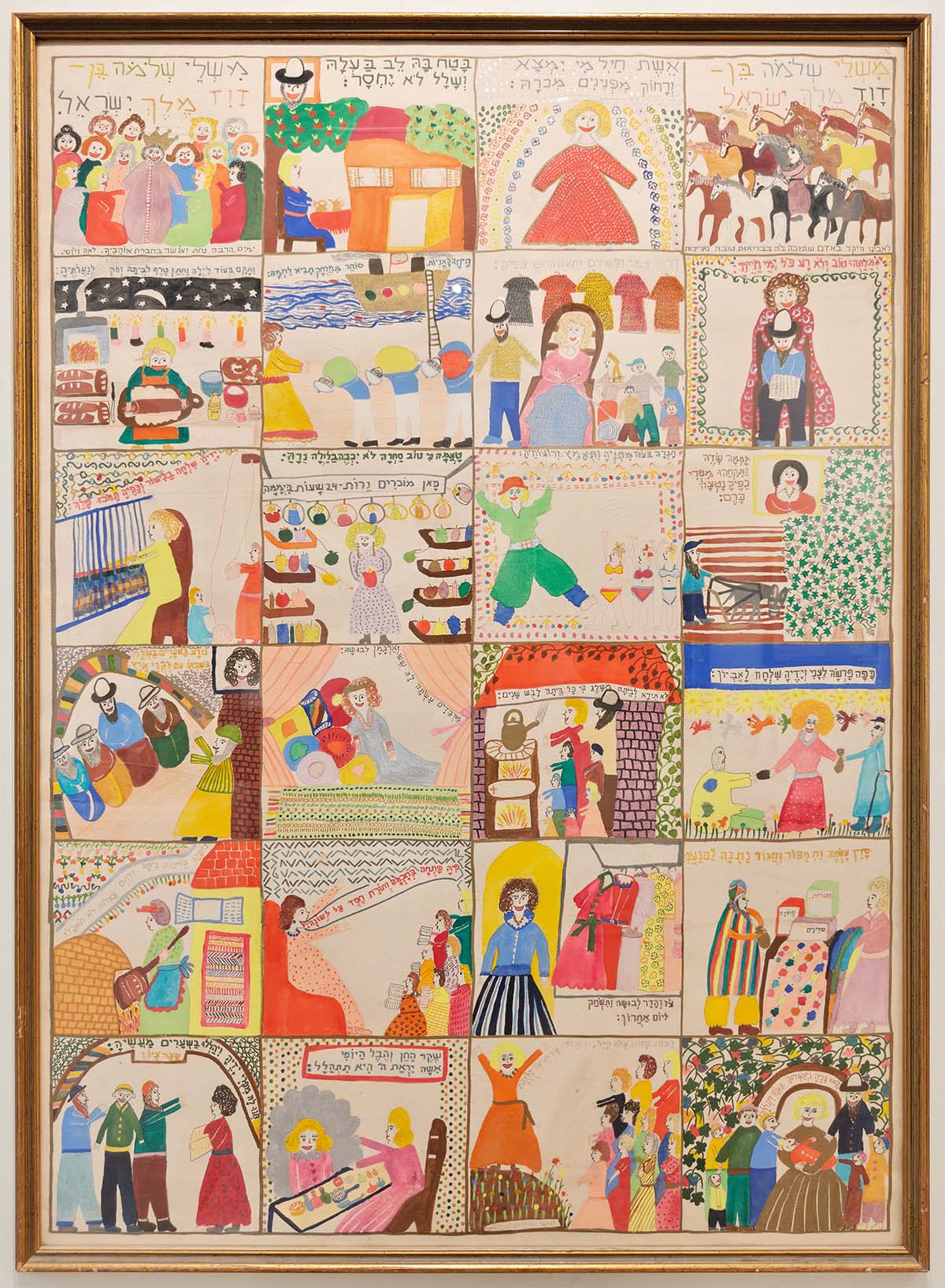
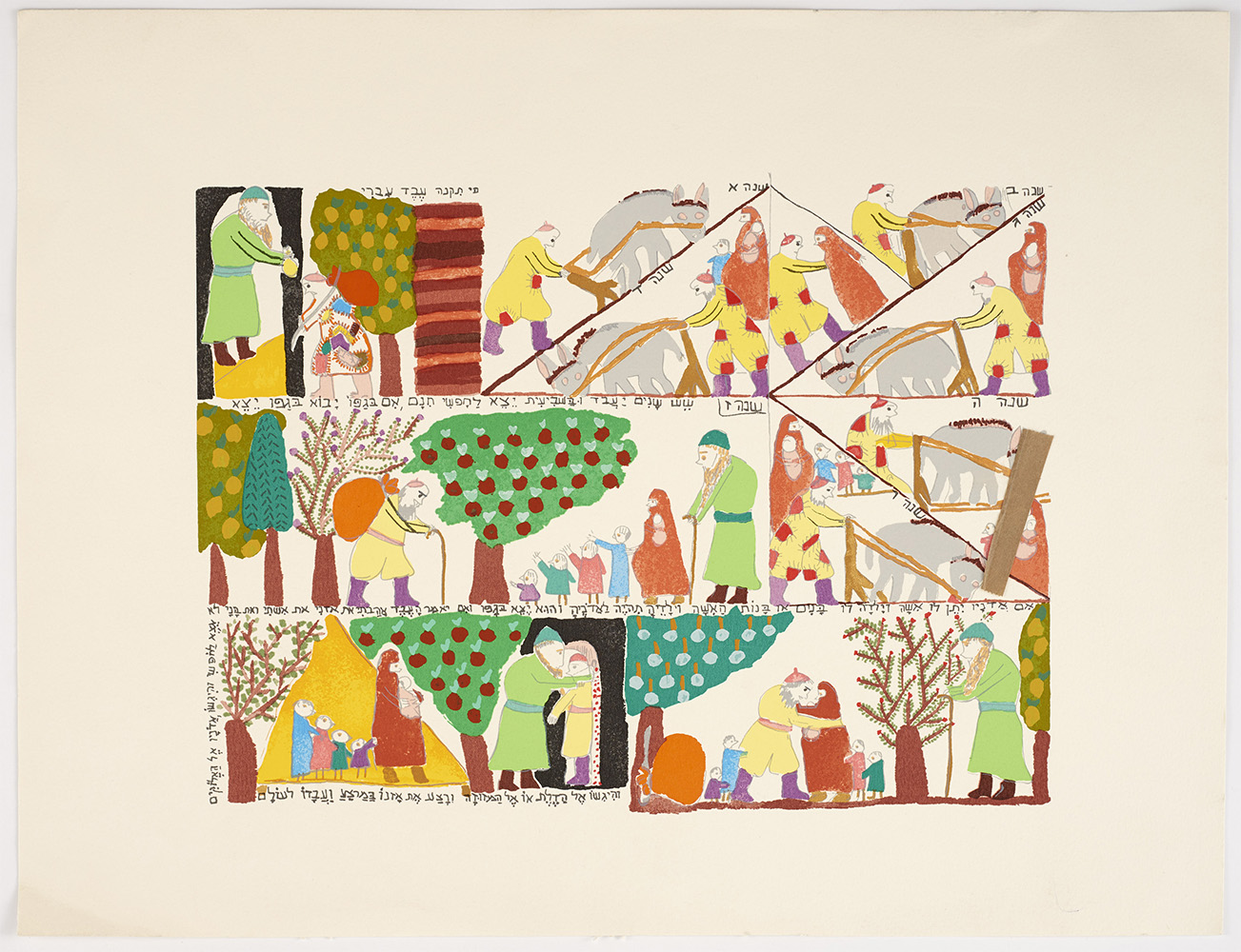
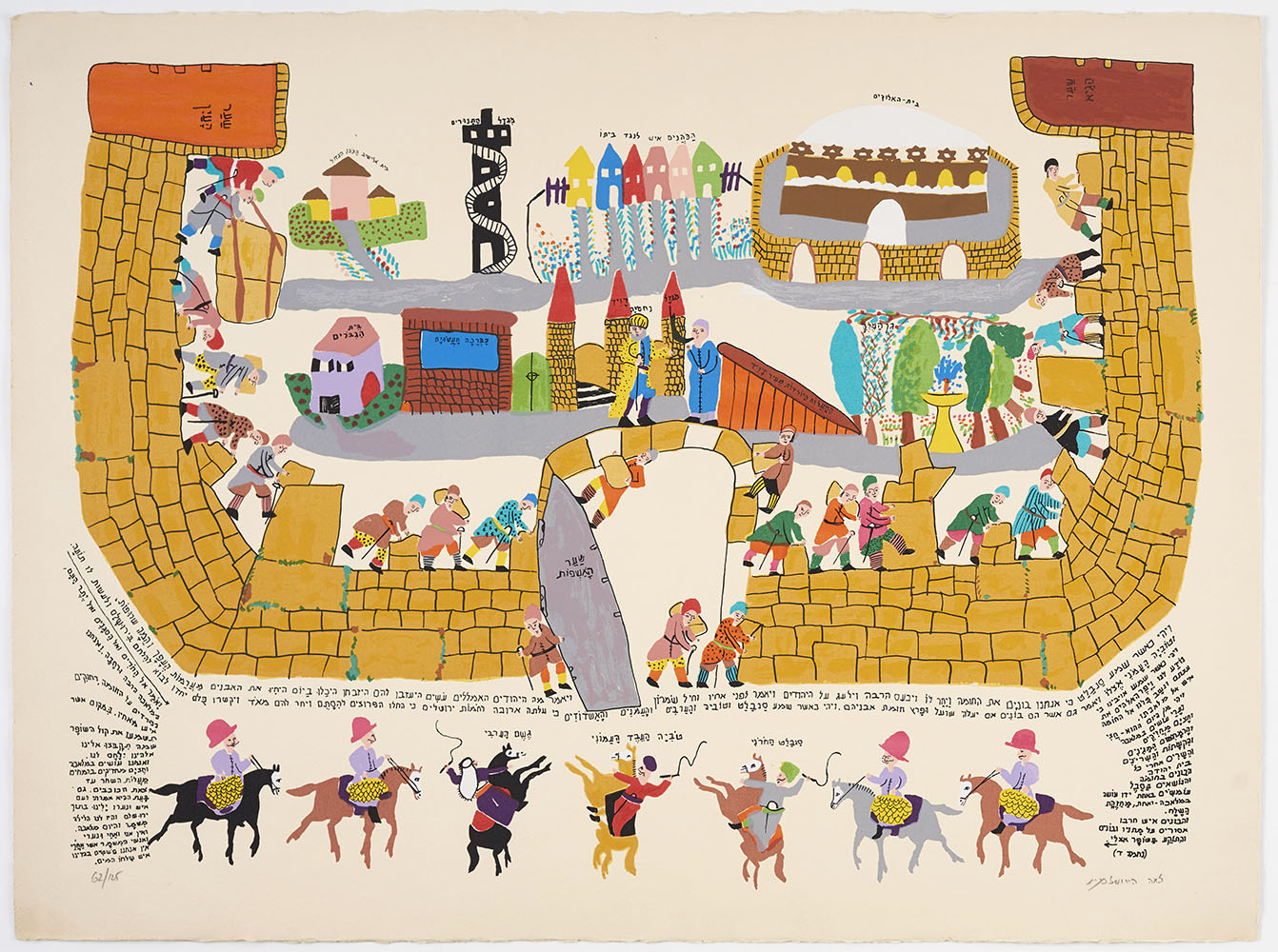
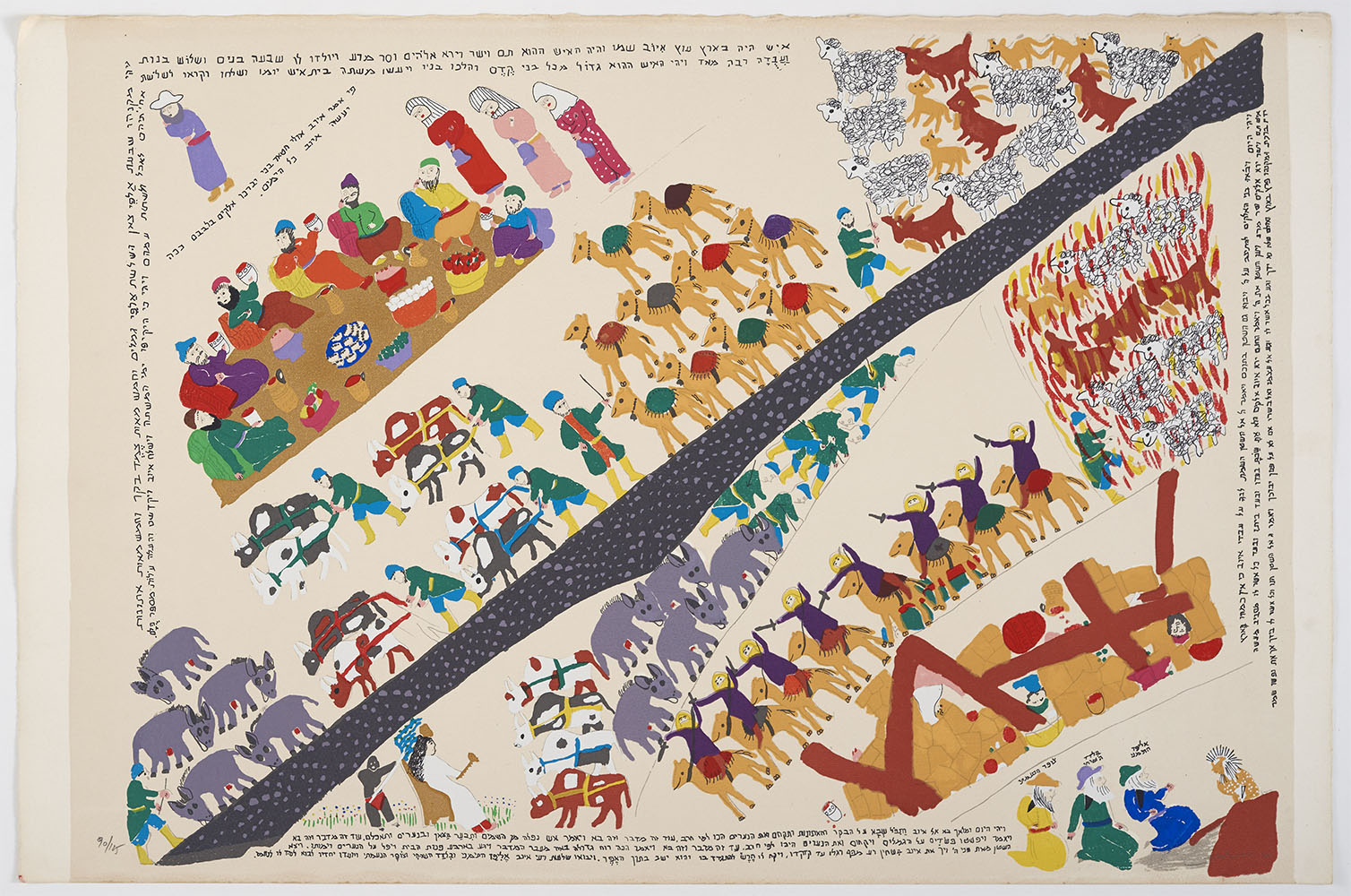
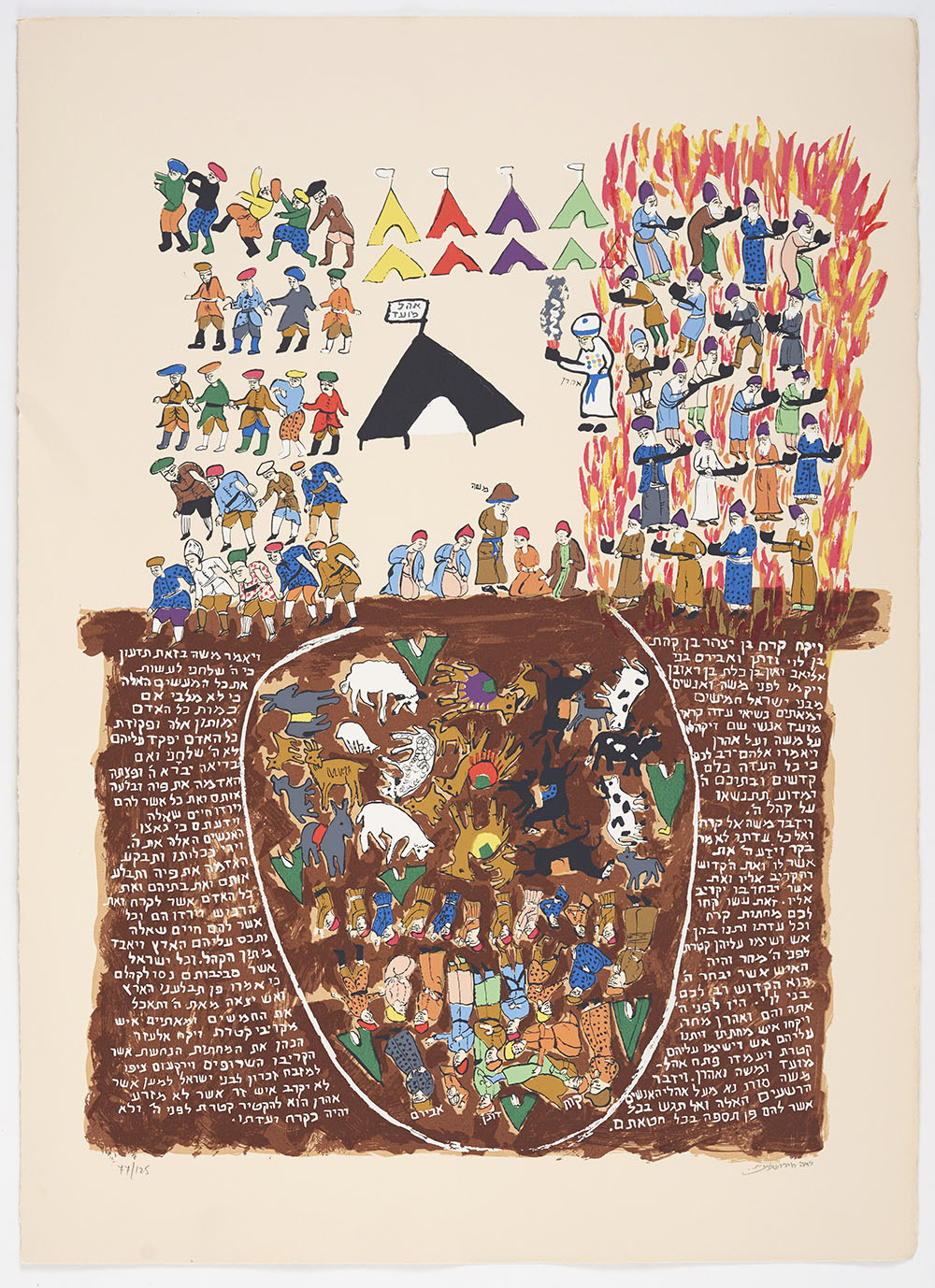
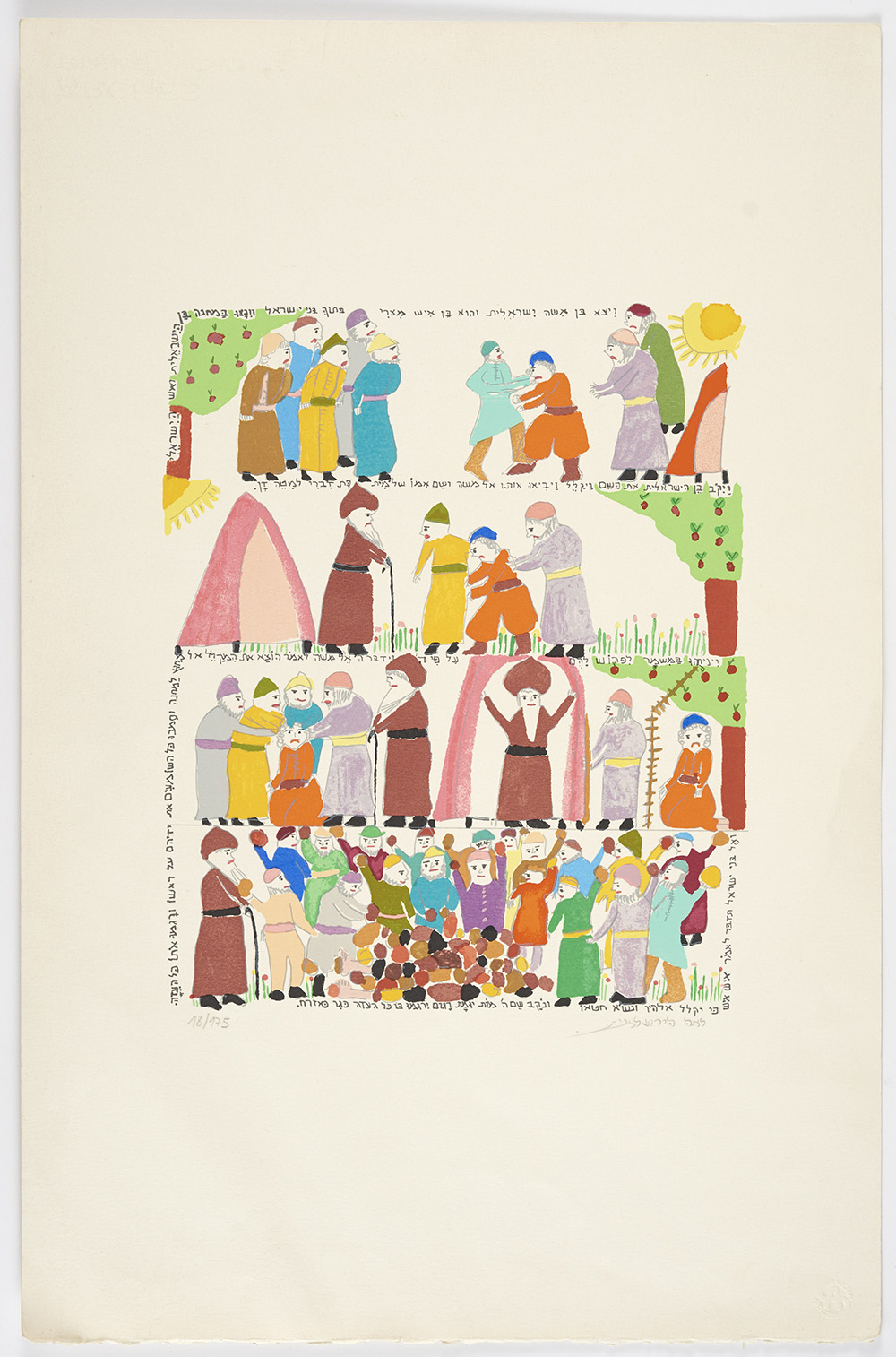
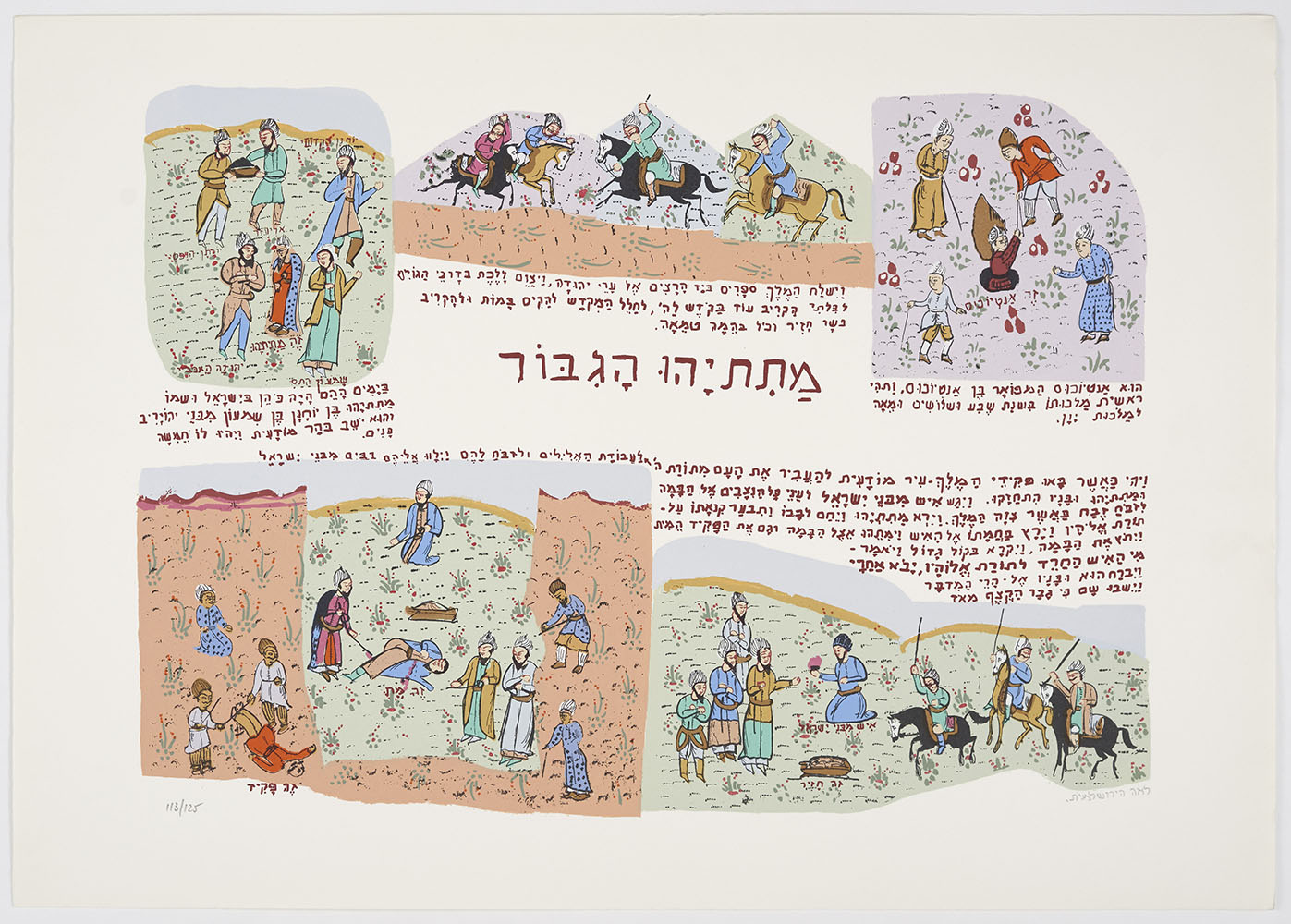
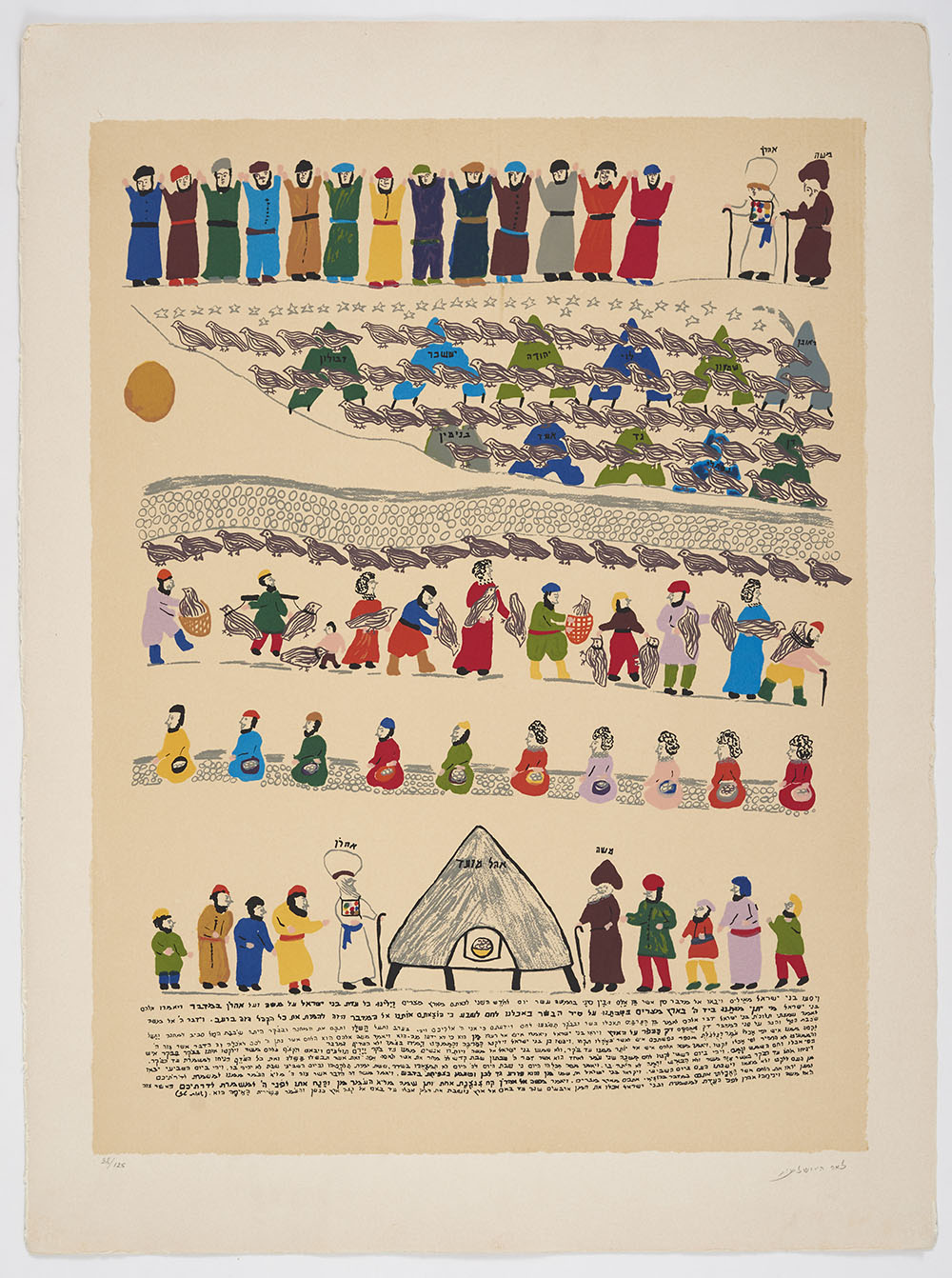
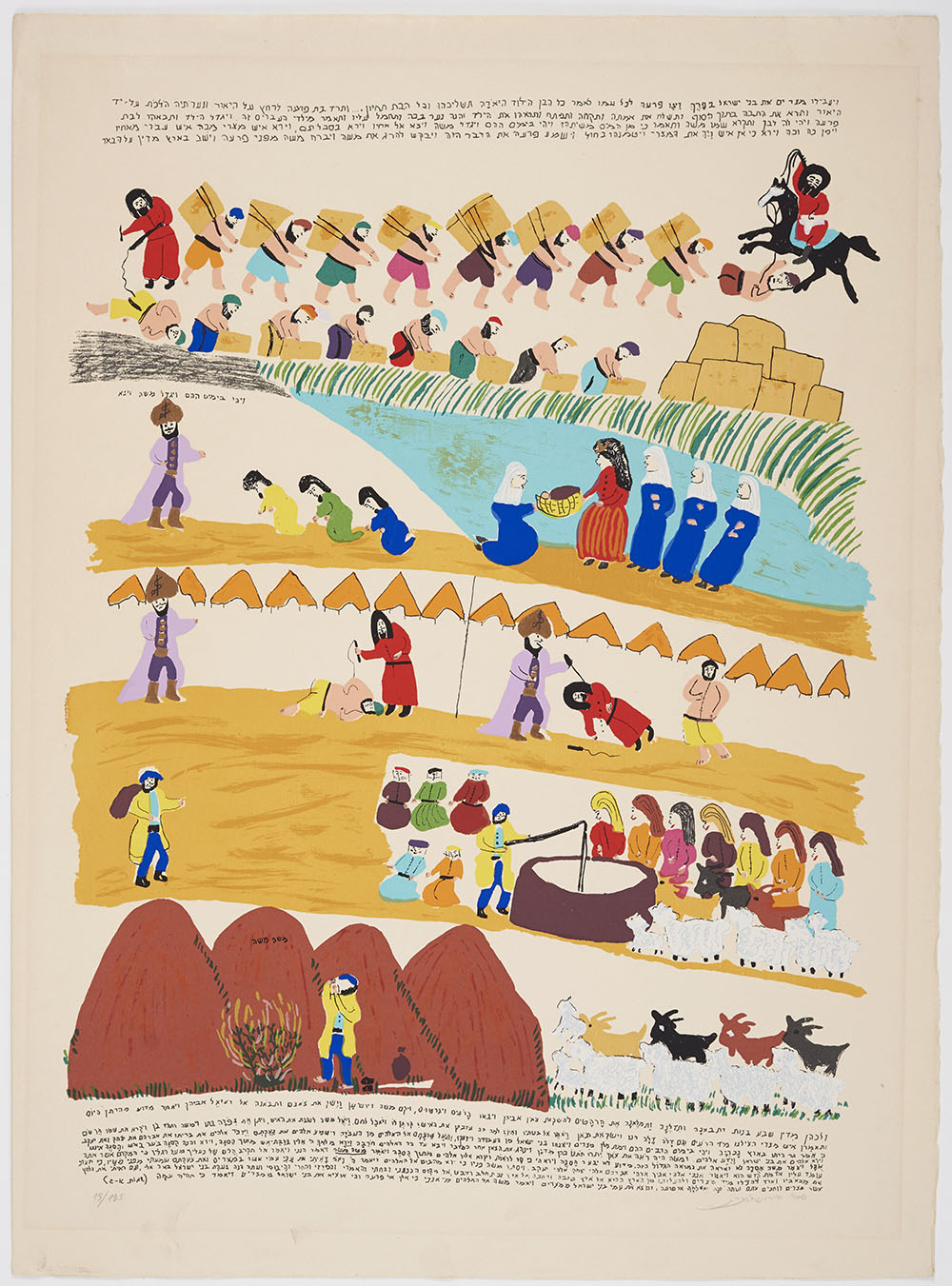
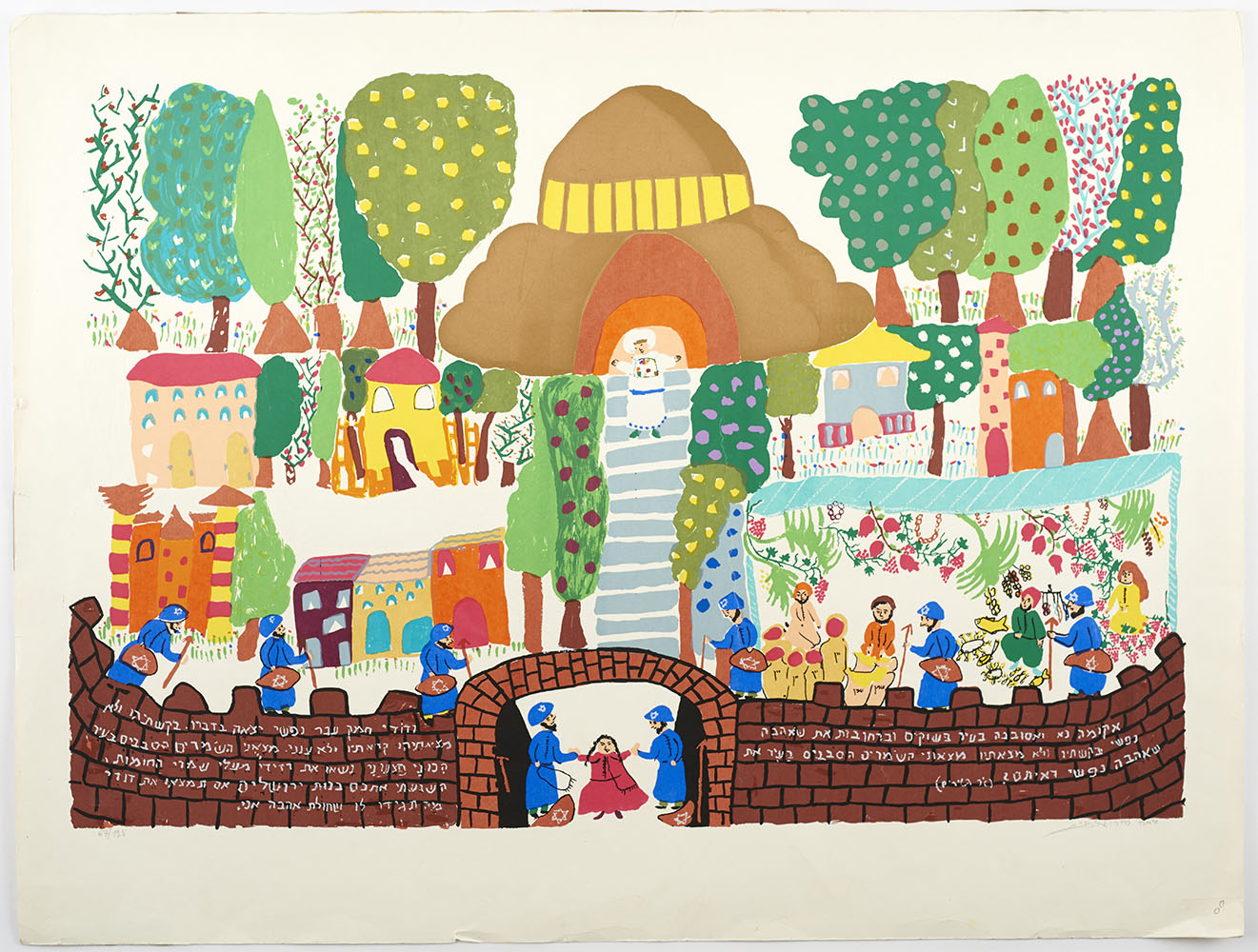
Leah HaYerushalmith (Leah Hirshfeld) is an outsider artist, storyteller, and educator. Most of her artworks dealt with the interpretation of biblical stories, through layered and colorful paintings, full of characters, in an innocent style and childlike simplicity.
Leah was born in Hungary after the end of World War II to a couple who were Holocaust survivors. While she was a baby, the three of them immigrated to the Land of Israel. After a short period in Ramataim, she and her family moved to Jerusalem, where she grew up and lived for many years. After marrying, she and her husband moved to Yamit in Sinai, but were forced to leave with their young children when they were displaced from their home during the Sinai evacuation. The pair looked for a new place where they could build a home and develop their Zionist vision, finding their place in the settlement of Chispin in the Golan Heights, where Lea lived until she passed in 2019. In addition to her artistic work, Lea was a teacher, who championed religious, national, and Zionist education.
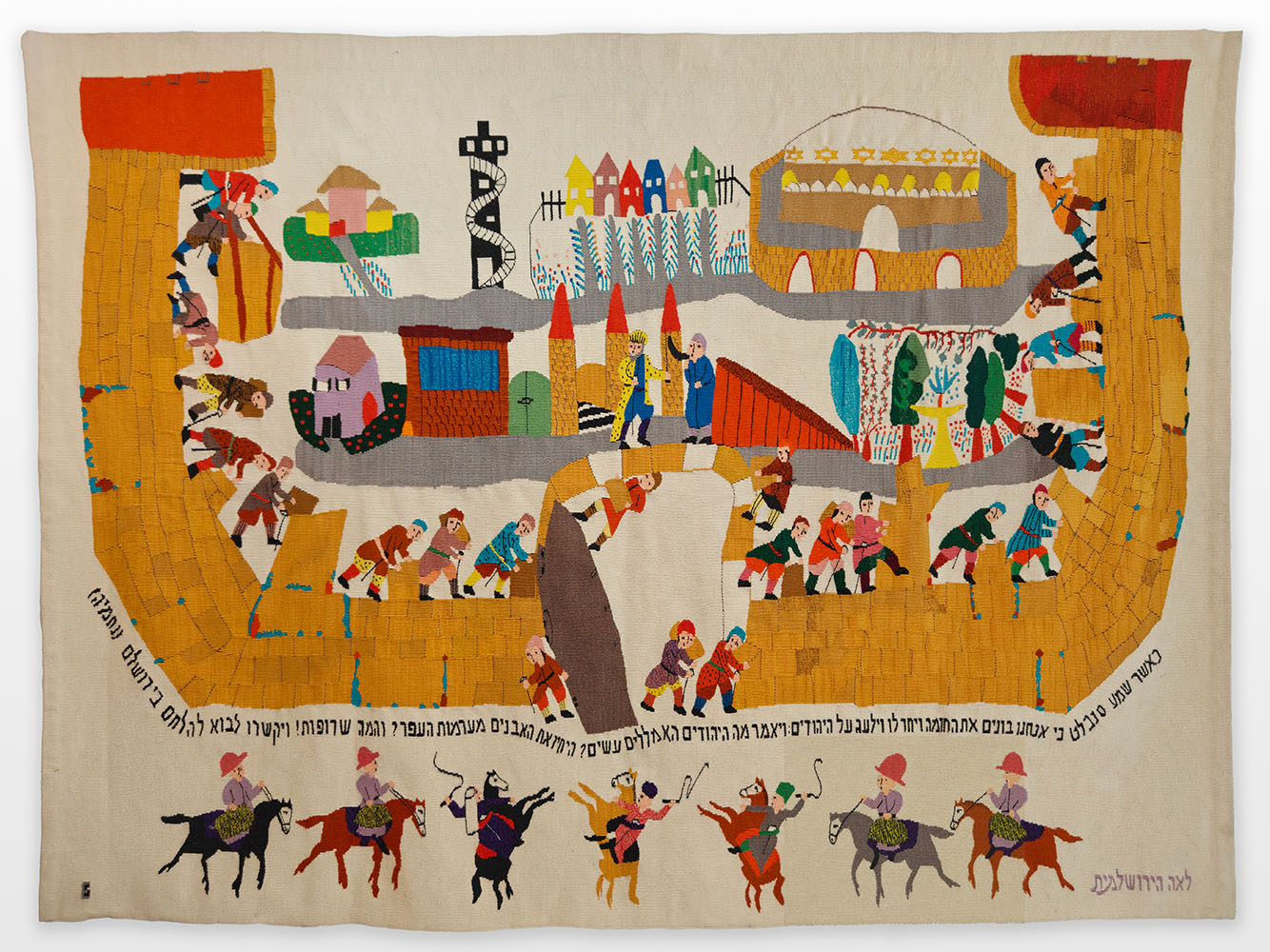
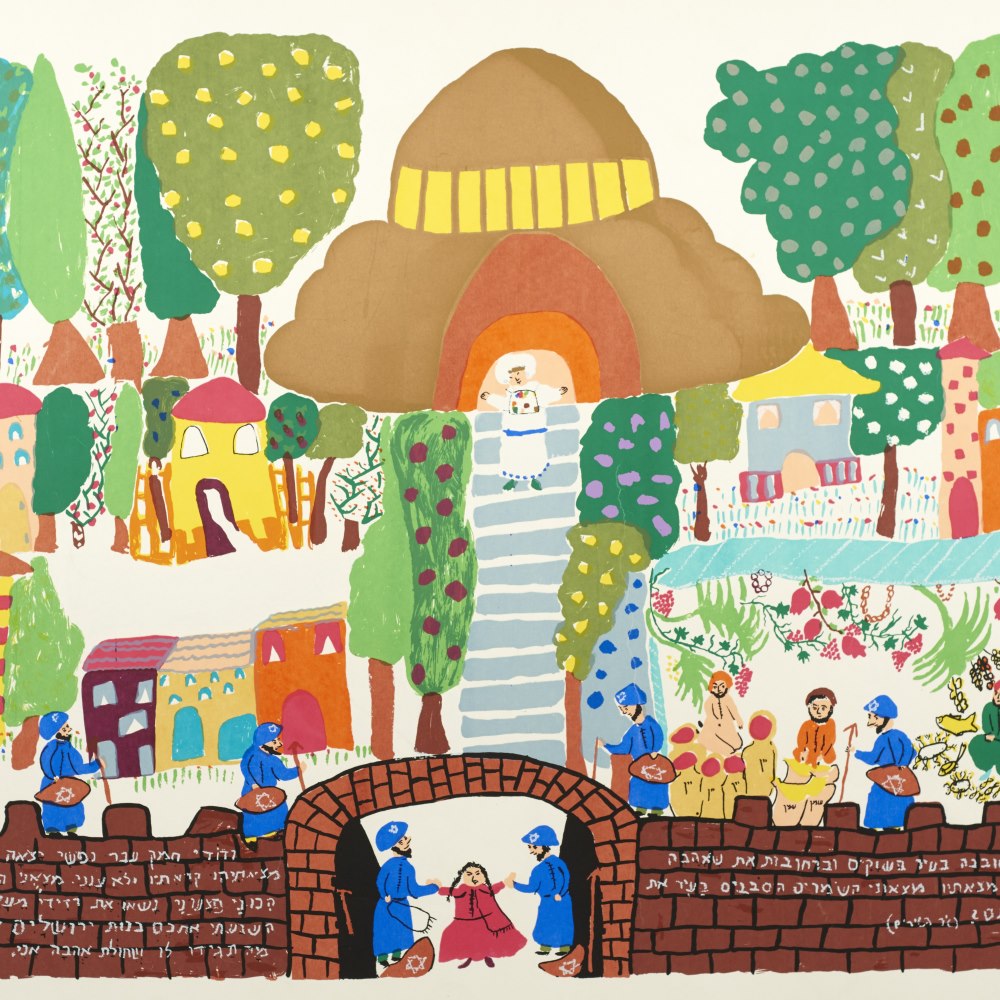
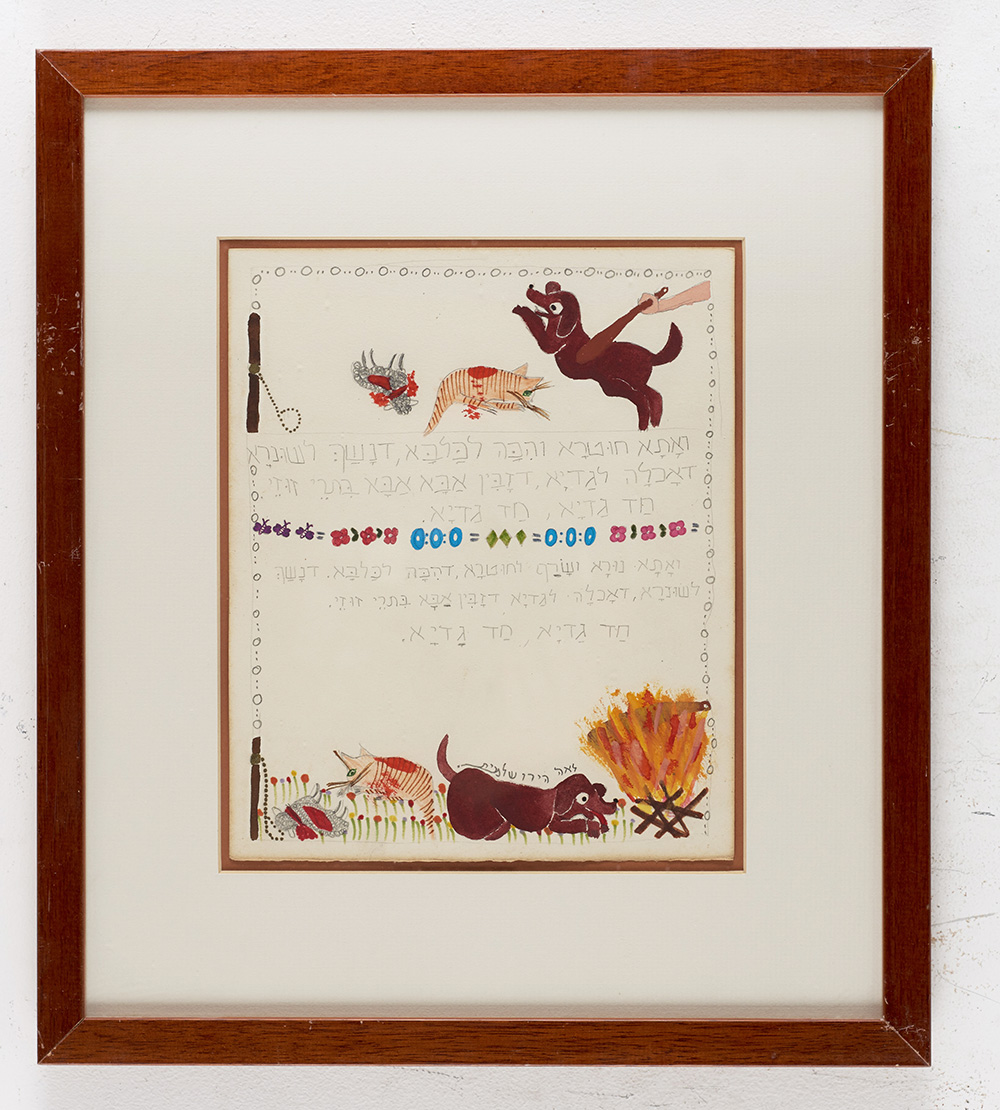
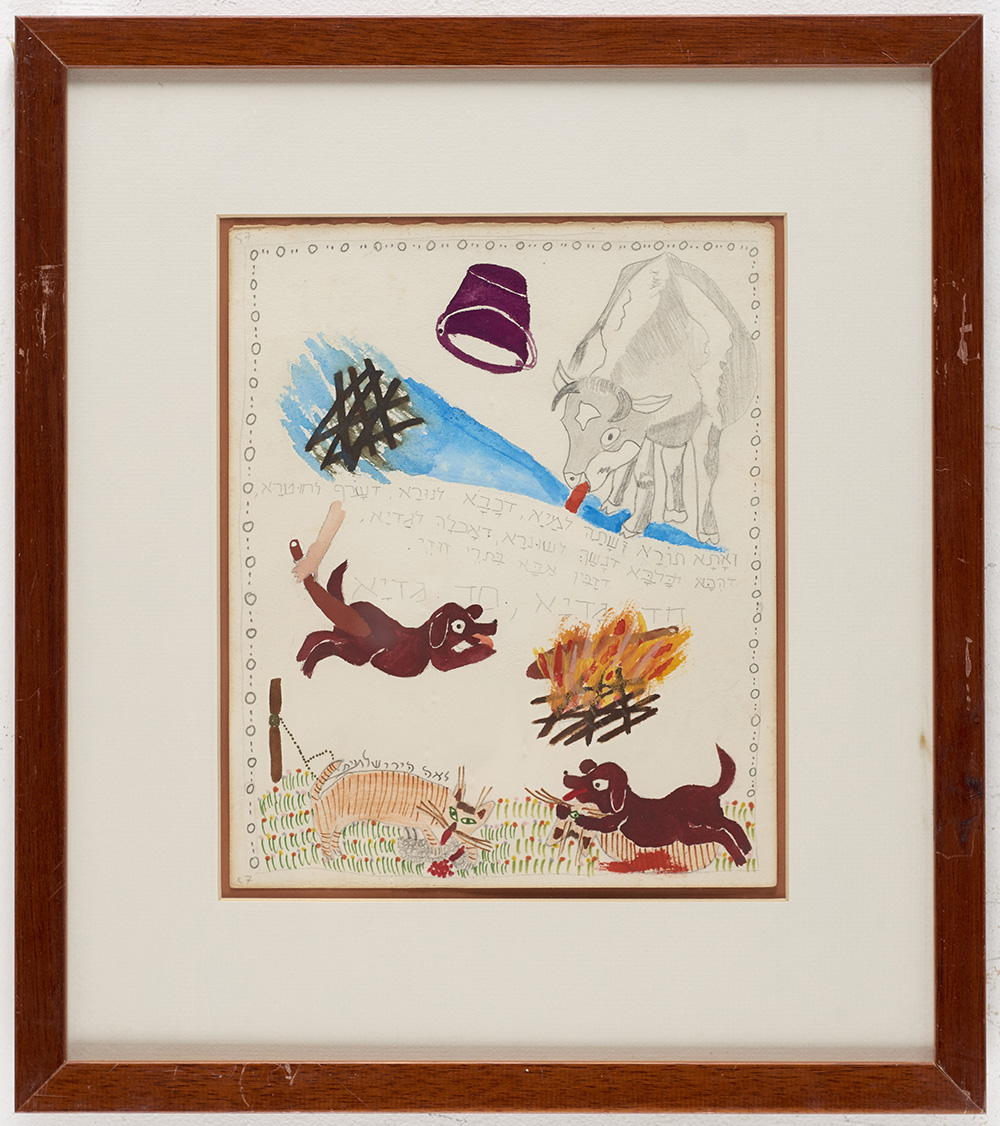
Lea was particularly interested in drawing with markers and colored pencils, in which she gave interpretations to biblical stories. Combining verses and entire Bible chapters, her works communicate with the viewer like a comic, a painting that tells a story in image and word. In addition, she also engaged in weaving, and wove artistic tapestries, hand-loomed, based on her paintings. The most important of her artworks is the “Haggadah Yerushalmith”, a spectacular Haggadah that includes 68 prints based on her paintings, which she prepared to illustrate the story of the Exodus from Egypt. This is what she wrote about the Haggadah:
“For many years – my childhood years, the Pessach festivity seemed to me to be the most important event in my life, alive and colorful in everything connected with the preparations for it. All these details and niceties that accompany it, all the utensils and dishes, the whitewashing, the cleaning, everything seemed so special and impressive. The summit of it all was of course the wonderful Seder evening. My dear parents always took care to have the table beautifully set up, to have special tableware for the holiday, sparkling crystal glasses and a silver cup for the Prophet Eliahu, and the Pessach dish with all the trimmings. Everything was just wonderful. Everybody had a richly illustrated Haggadah, but father had the ancient one which caused us much curiosity and questions. Every year father told us again about the slavery and the darkness in which my parents were living in the years of gloom in Europe when they were prisoners of the Nazi persecutors. How the whole family of my father was annihilated up to the last person and only he was left over from what was once a proud family, and how this Haggadah was the only thing father managed to rescue from the ruins of his house and his family. It is clear that all these wonderful impressions connected with the holiday, together with the experience my parents underwent, lead to it that as soon as I took a brush into my hands and started to paint I knew that sooner or later I would paint the Pessach Haggadah, As I saw it before me from the days of my childhood, through the powerful experience of Pessach which had I in my childhood home and with the very special atmosphere which my wonderful parents bestowed upon us.”