Past Exhibition
The Engel Gallery presents a comprehensive exhibition dedicated to Anna Ticho (1894–1980) — one of Israel’s most influential and beloved artists, whose name is inseparable from the city of Jerusalem.
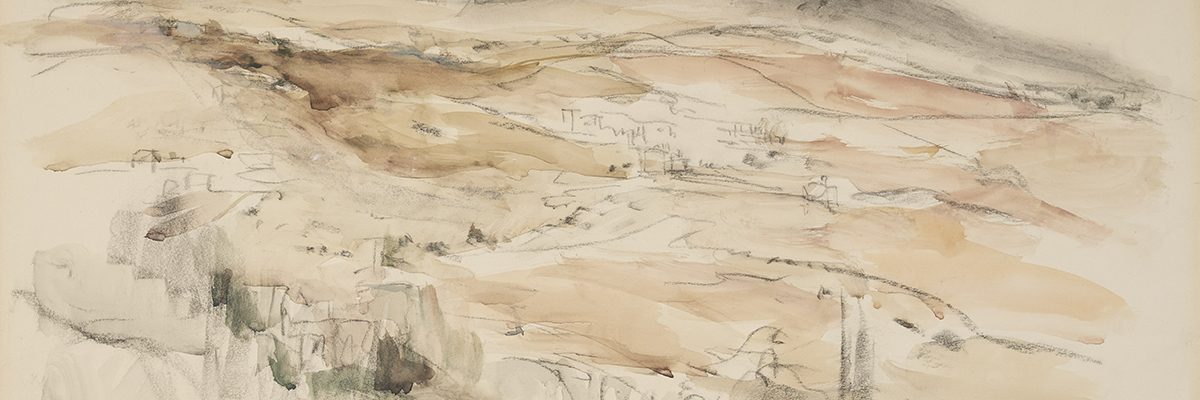
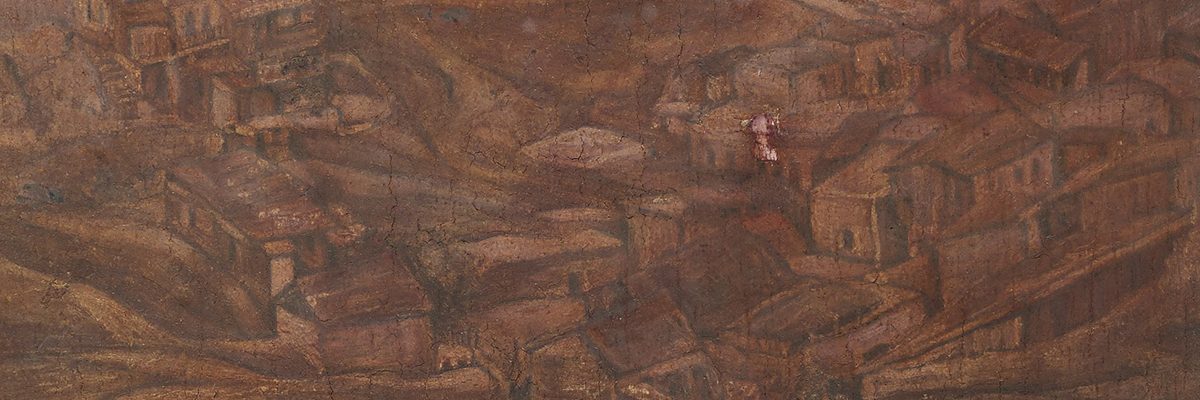
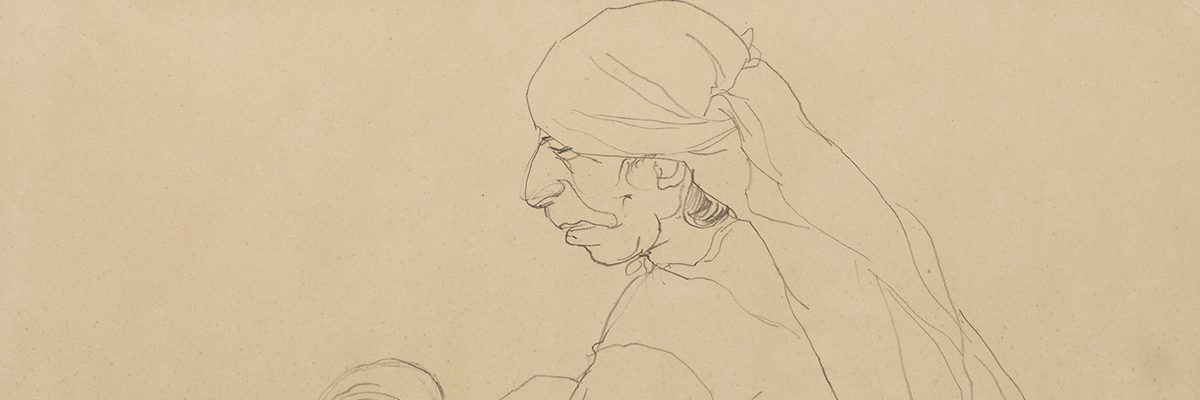
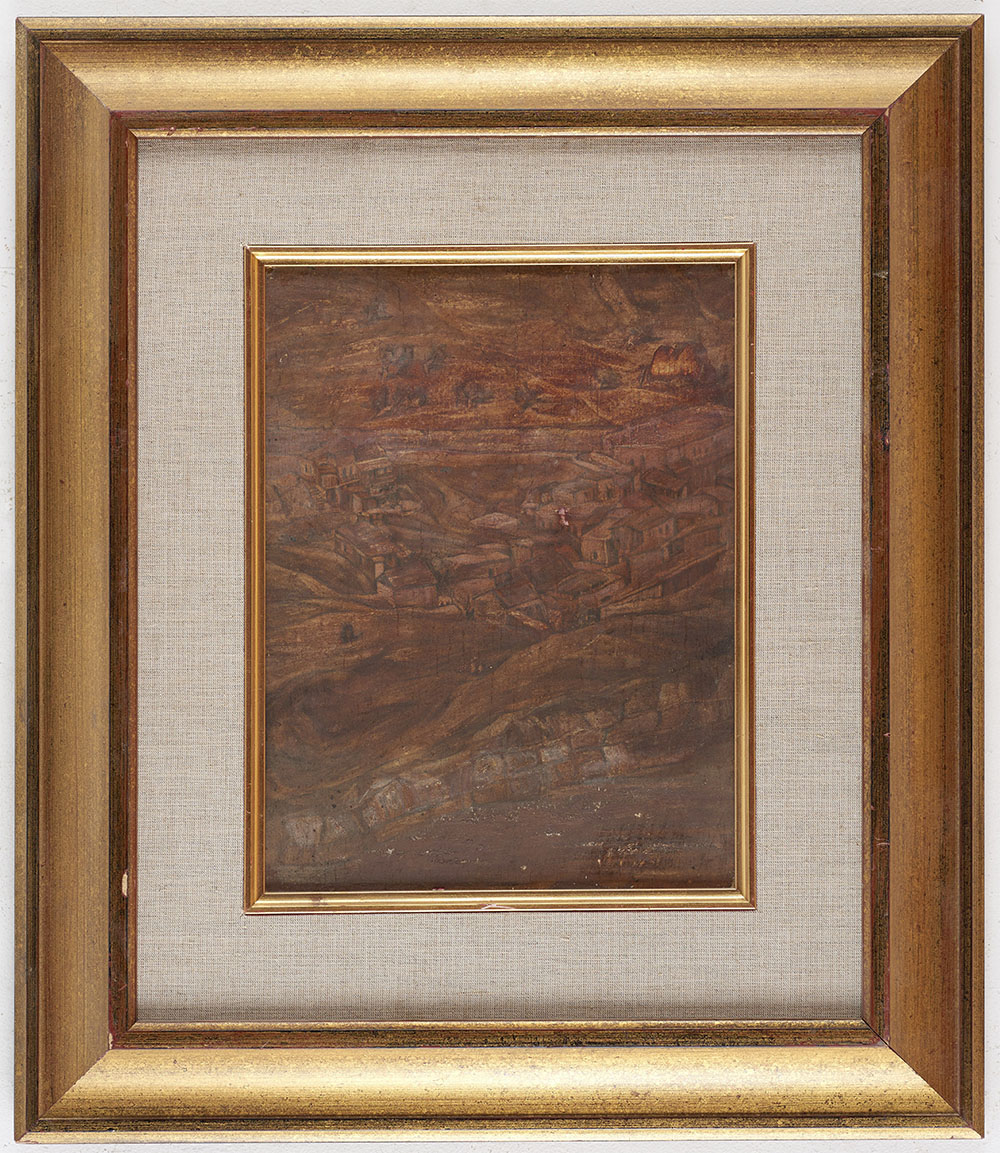
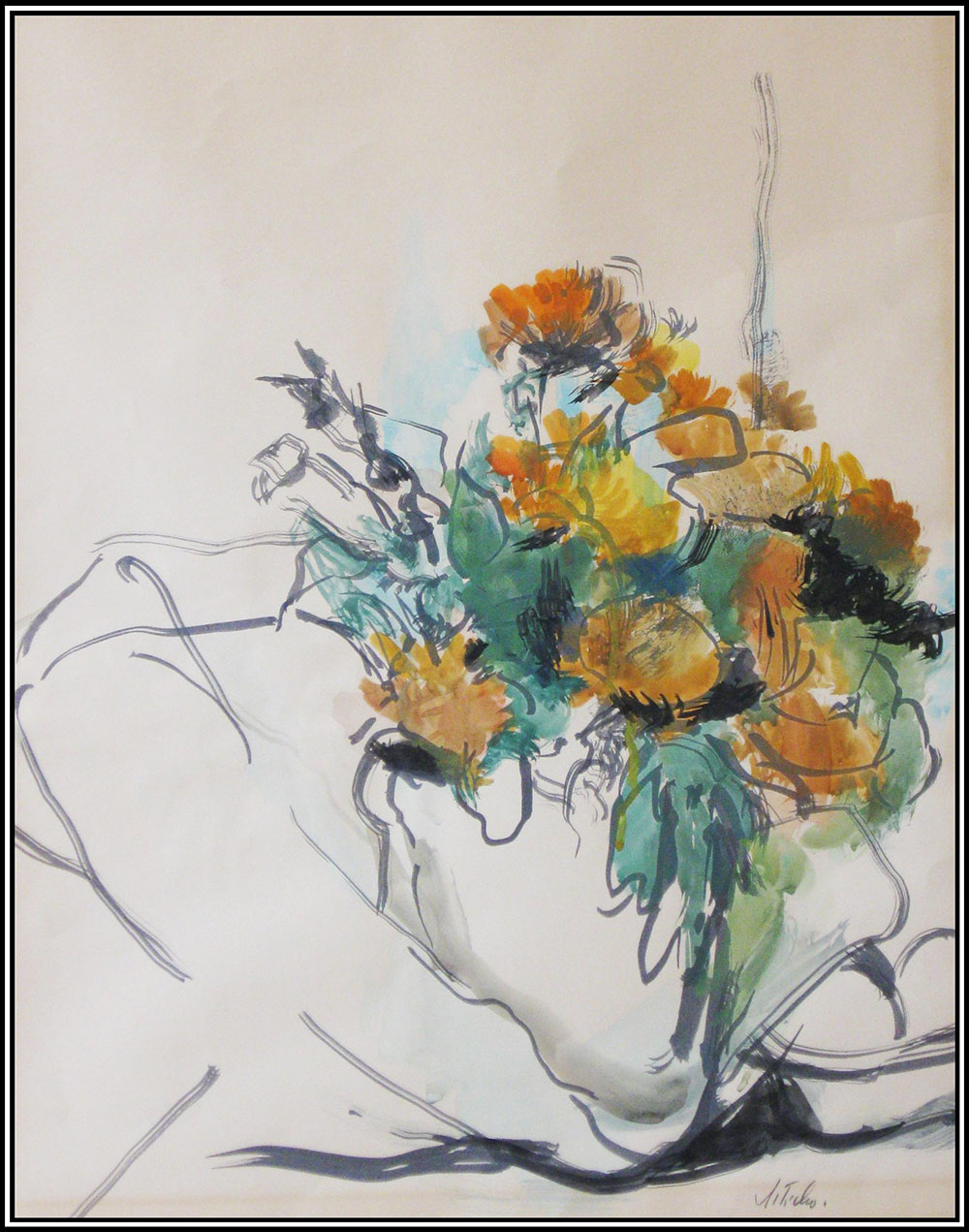
Anna Ticho – The Fruits of Her Labors Planted a Vinyard
/ Matar Engel, 2025
It is impossible to separate Jerusalem from Anna Ticho – artist, creator, and visionary – whose contribution to the shaping of Israeli culture and art in general, and to Jerusalem in particular, is both profound and enduring. Her landscapes, portraits, and flower paintings have become, over the years, some of the most iconic symbols of Israeli art.
Anna Ticho (1894, Austro-Hungarian Empire – 1980, Israel) studied painting and drawing at the Academy of Fine Arts in Vienna, where she was first exposed to the modern art movements of her time. In 1912, she immigrated to the Land of Israel and married Dr. Abraham (Albert) Ticho, a renowned ophthalmologist who specialized in eye surgery and practiced in Jerusalem.
The couple later purchased a home in the city that would eventually become Ticho House – today a museum and one of Jerusalem’s key cultural landmarks. On the ground floor, Dr. Ticho established a private eye clinic that served patients from across the Middle East. During clinic hours, Anna assisted her husband and sketched the waiting patients – vibrant, multifaceted Oriental figures that captivated her with their human beauty.
A pioneering figure in the local art scene, Ticho played an active role in establishing and supporting major cultural institutions such as the New Bezalel Academy and the Israel Museum. She opened her home to artists, writers, musicians, and intellectuals, transforming it into a lively cultural salon. Among her guests were S.Y. Agnon, Else Lasker-Schüler, Martin Buber, Gershom Scholem, Marc Chagall, Mordecai Ardon, Yosef Zaritsky, and many others.
At the heart of Ticho’s artistic practice was the act of seeing – a deep, attentive observation of the world around her. Her sensitivity to light, space, and atmosphere allowed her to portray the landscapes of Jerusalem with a unique and poetic vision. Upon arriving in the Land of Israel in 1912, she stopped painting for six years – the blazing Middle Eastern sun, she later said, had “paralyzed her artistic sight.”
She resumed painting only after World War I, upon returning from Damascus, where Dr. Ticho had served as an eye surgeon in the Austrian army following the couple’s expulsion from Jerusalem by the Turks.
Ticho’s early drawings are distinguished by their precision, density of line, and an ongoing exploration of light and space. Her profound love for Jerusalem gave her work a distinctive lyrical quality that fused meticulous naturalism with deep emotional resonance. She captured the essence of the city’s hills, alleys, and surrounding landscapes with an insight and clarity unseen before in Israeli art.
The death of Dr. Ticho in 1960 marked a turning point in her work. In the early 1960s, her style underwent a dramatic transformation: the precise, disciplined line that had characterized her earlier drawings gave way to more abstract and expressive compositions. Straight, rigid contours became fluid and flowing; dense spaces dissolved into dark, almost opaque masses. These shifts reflected the mourning and emotional upheaval she experienced after her husband’s death.
Yet from that loss emerged renewal. From the late 1960s onward, Ticho turned increasingly to painting flowers, a subject that became central to her later work. These watercolor paintings, rich with movement and color, express a sense of vitality and rebirth. In them, Ticho achieved a masterful balance between control and freedom – her brushstrokes became loose and spontaneous, while color spilled beyond the drawn lines, a visual metaphor for release and renewed life.
Ticho and the Engel Gallery
Since the 1950s, the Engel Gallery has been one of Jerusalem’s leading cultural institutions, and Ticho maintained a close personal relationship with its founders, Zehava and Shmuel Engel. The gallery represented Ticho throughout her career, organizing numerous exhibitions in Israel and abroad, and publishing prints, etchings, catalogs, and books that helped make her art accessible to a broad audience.
Shmuel Engel also served as her personal artistic secretary, supplying her with materials, typing her letters, and documenting her work.
To this day, the Engel Gallery holds one of the largest private collections of Anna Ticho’s works worldwide, lending them regularly to exhibitions and museums.
The current exhibition presents works from all periods of her life – including rare pieces never before shown – offering a renewed encounter with a singular artist whose vision and devotion left an indelible mark on the landscape of Israeli art.