When the Bathroom Becomes a Museum:
Toilets in Art
/ Matar Engel 2026
Meidad Landoy is a spiritual realist painter. With delicate brushstrokes, Landoy weaves reality in a spectrum of colors. He studies cultural institutions such as the Israel Museum and has created a series of paintings inspired by them. Landoy combines modern spaces, classical art, and figures found in museums to create deeply layered compositions.
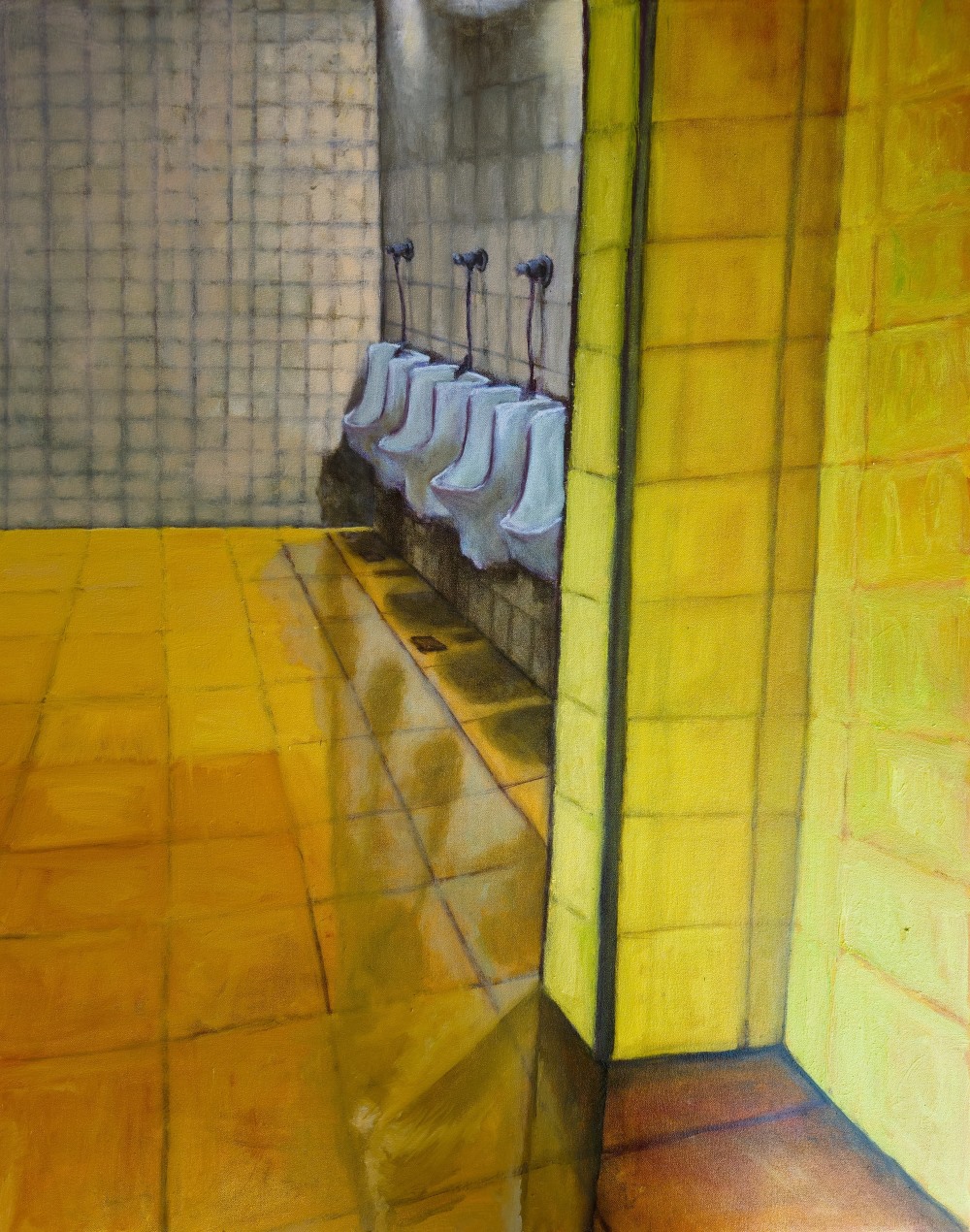
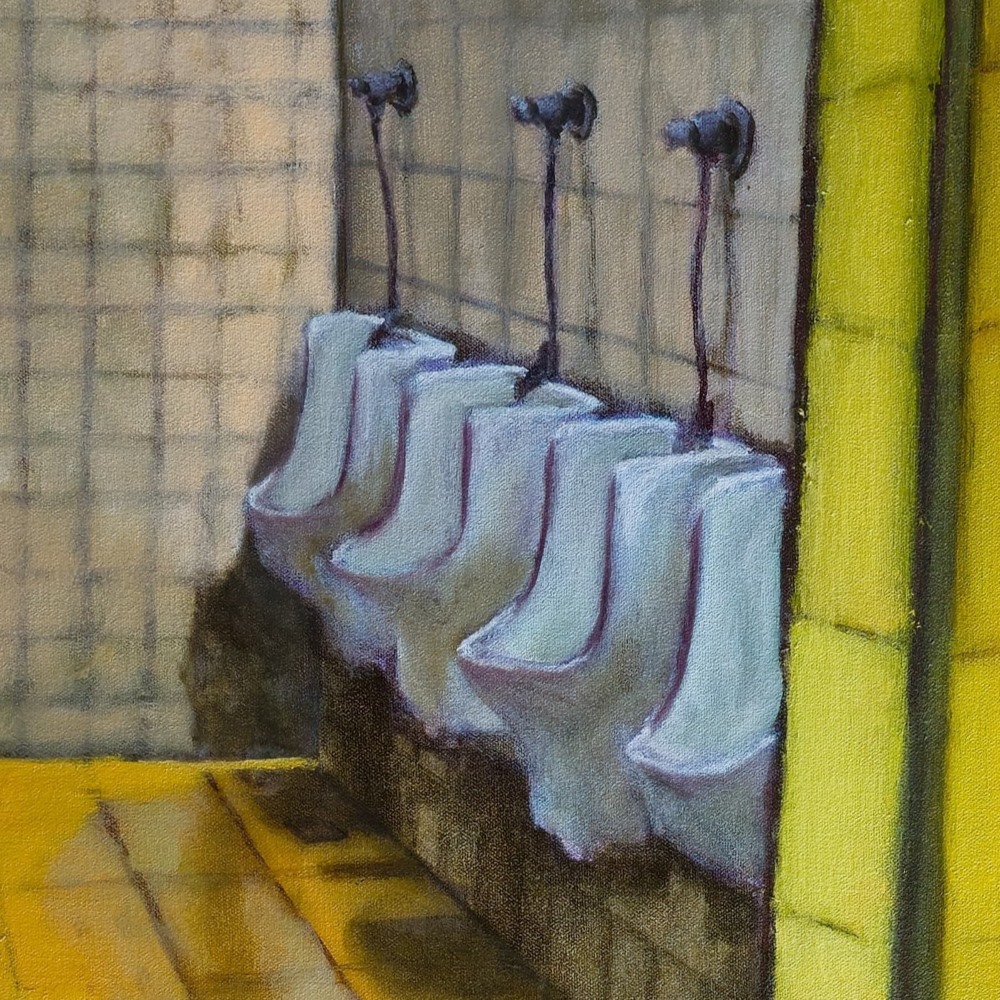
Recently, Meidad Landoy painted a new artwork as part of his museum series. This time, another space from the Tel Aviv Museum. “Which one” you ask? The entrance hall with Yaacov Agam’s Procession of Time? One of the galleries? Perhaps the iconic Lightfall of the new wing? No, Landoy painted the urinals in the restroom. When I first saw it, I was surprised, and as I delved deeper into the artwork, I discovered fascinating elements that are not only present in Landoy’s artwork but resonate throughout the broader art world, from modern art to the most contemporary artwork.
So, allow me to be blunt: artists are creatures of “convenience”, they like the muses to come to them. They paint still-life because there are fruits at home, and they search for the ideal landscape through their window. In this article, I want to address an everyday subject that repeatedly appears in modern and contemporary art – the bathroom.
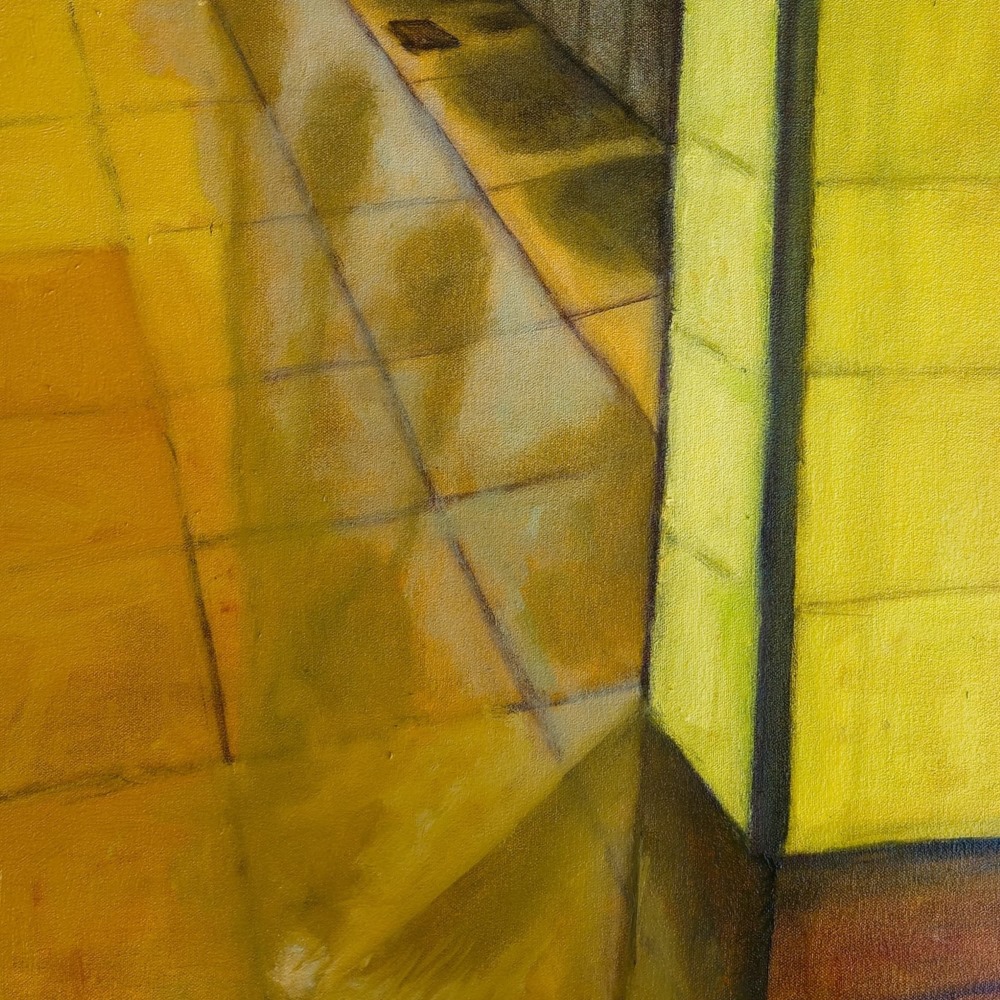
Meidad Landoy, Tel Aviv Museum (Fountains), 2025, oil on canvas, 100x80cm
(For those concerned – we will not discuss bodily functions of any kind, although these too are common in many examples, such as in the artworks of Piero Manzoni, Wim Delvoye, and Chris Ofili)
The First Toilet in Modern Art
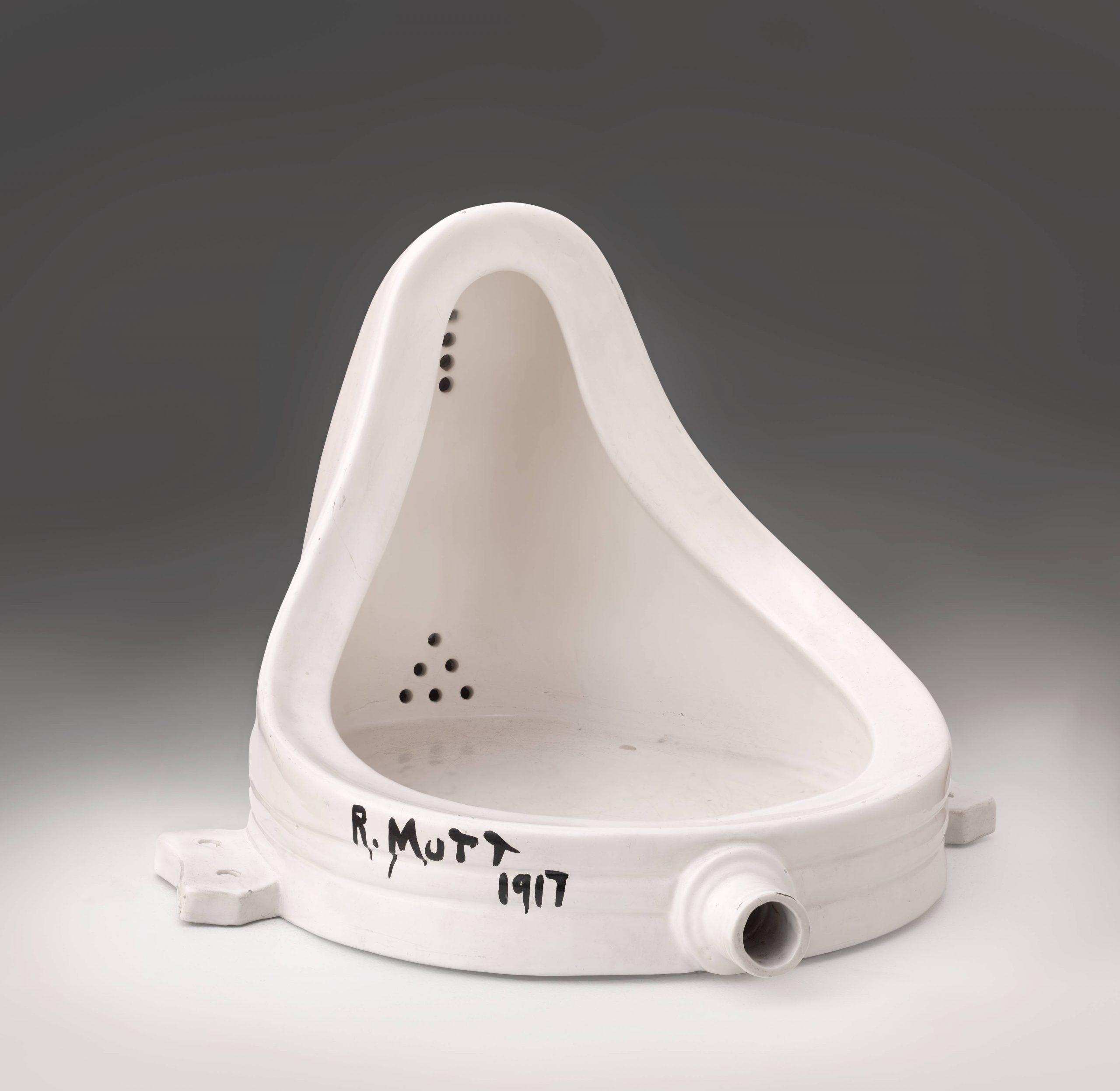
It all began with one of the artworks that changed the face of modern art – Fountain (1917) by Marcel Duchamp. A porcelain “readymade” urinal (“readymade”: art made from industrially manufactured objects) that the artist purchased, signed with the pseudonym “R. Mutt,” and submitted to the committee of the Society of Independent Artists in New York (which Duchamp helped found) for its first exhibition, which according to its charter was obligated to accept any artwork by a member. When Fountain was rejected by the present board members, Duchamp resigned in protest of the censorship, and eventually the artwork was exhibited (though hidden behind a partition).
Breaking boundaries and crossing them is a fundamental element of art, Duchamp’s Fountain redefined the rules of the game. It refers to the everyday aspect of a “banal” object made of white porcelain, found in every public place, while we are the ones who assign it meaning. Some saw its presentation as vulgar or as an empty act of mockery; others viewed it as a challenging gesture that explores the limits of artistic creation. Duchamp succeeded in destabilizing our perspective. To this day, the artwork is considered one of the cornerstones of modern and contemporary art. If you are interested in seeing the artwork with your own eyes, a 1960s reproduction is (at least at the time of writing) displayed in the Israel Museum’s collection.
The Object as Muse
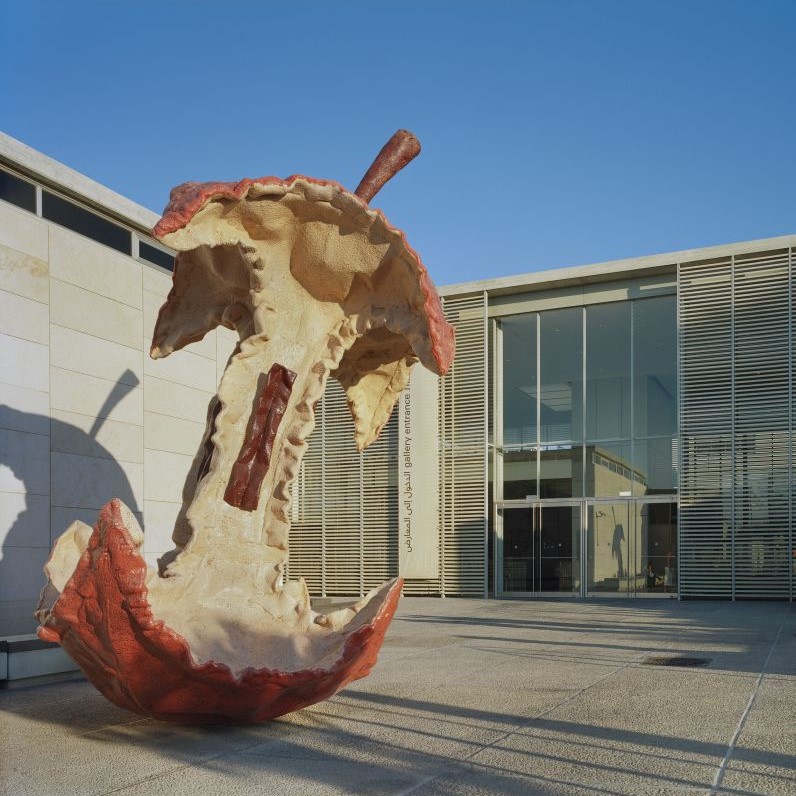
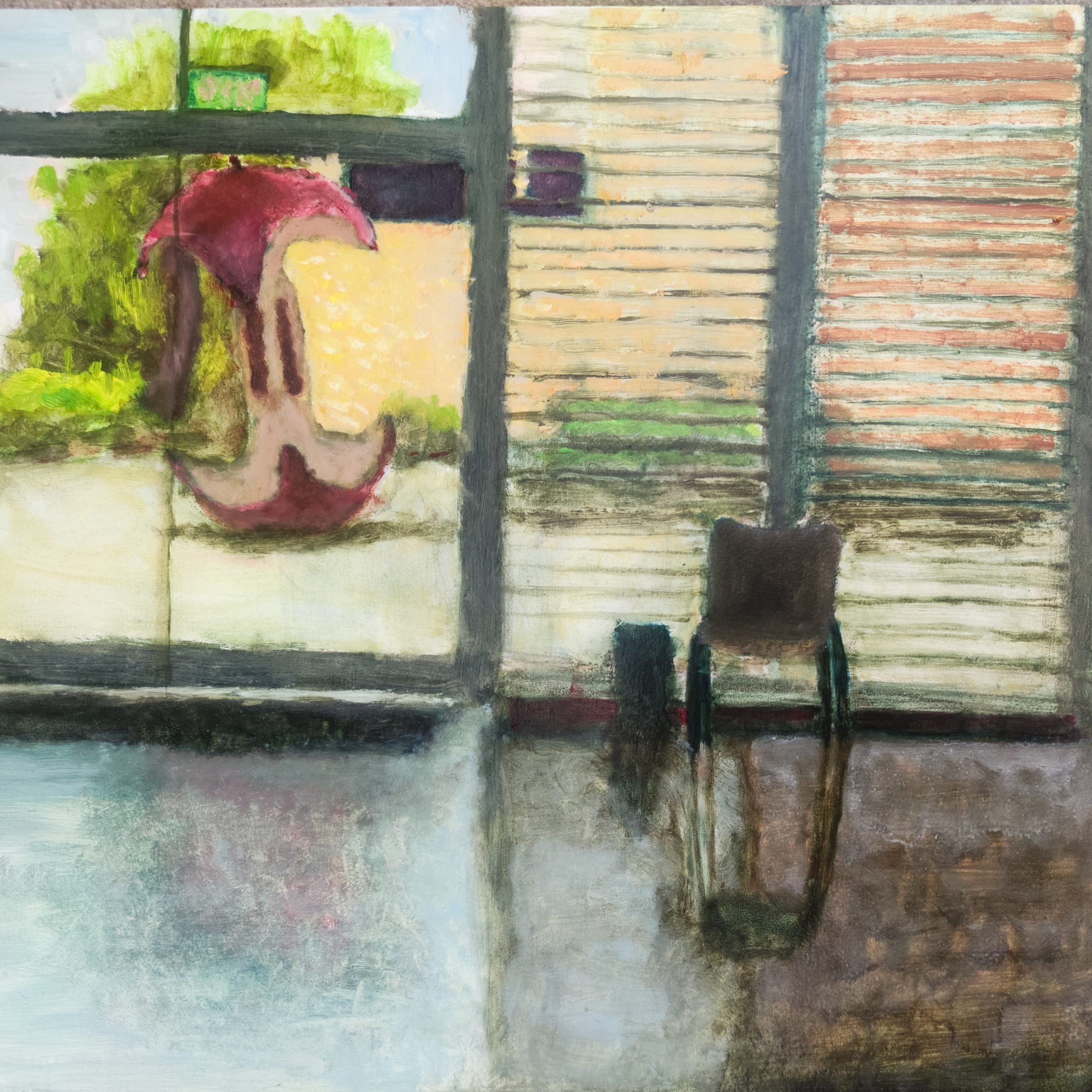
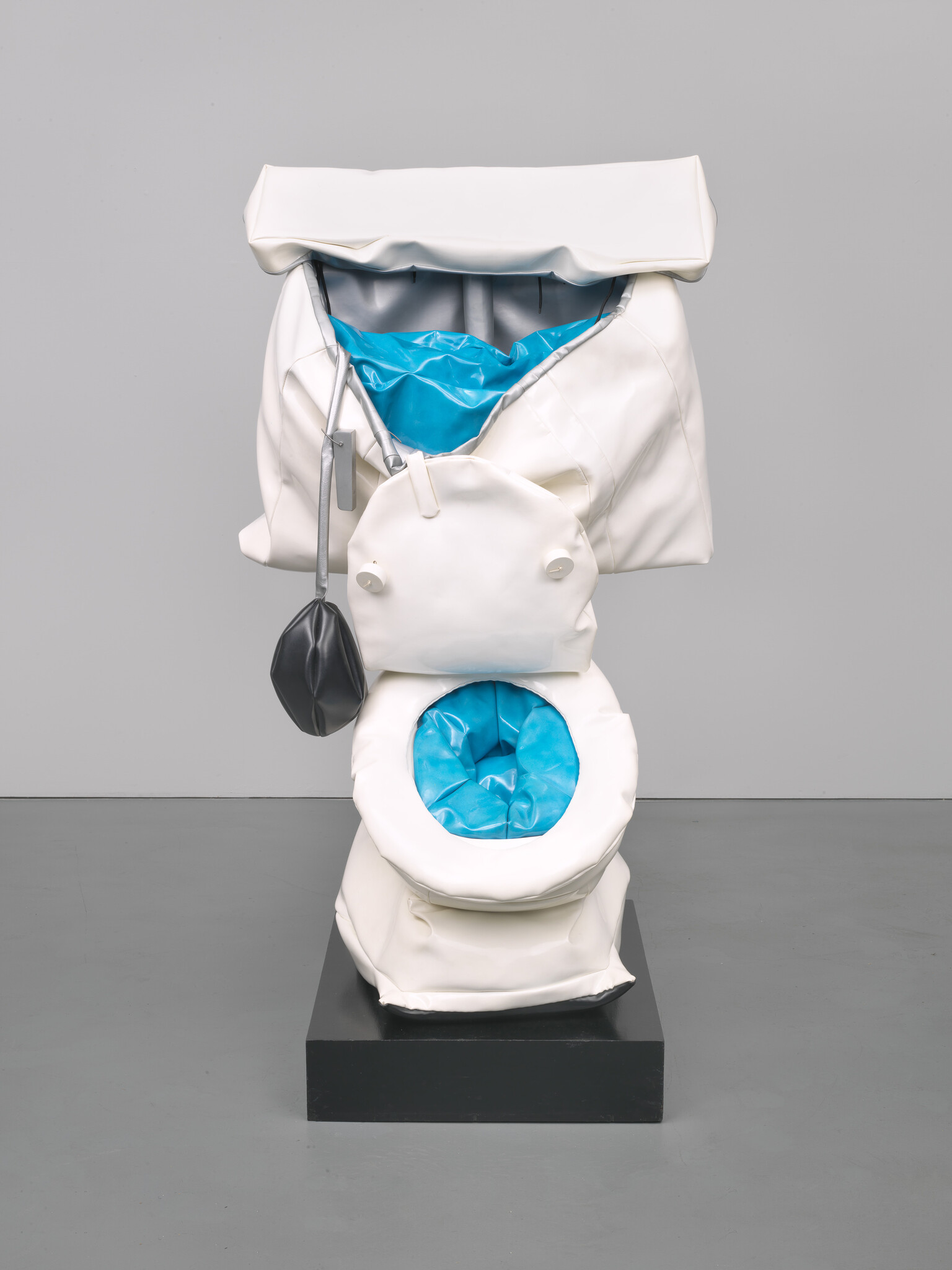
Following Fountain, the toilet as an artwork began appearing in the art world. For example, in the artwork of Swedish-American artist Claes Oldenburg, Soft Toilet (1966). Oldenburg, one of the leading figures in American Pop Art and a pioneer of environmental and installation art, also created Apple Core, which can be seen at the Israel Museum (Meidad Landoy painted the sculpture in one of his Israel Museum artworks).
Claes Oldenburg & Cossje Van Bruggen, Apple Core, 1992, cast aluminum coated with resin and painted with polyurethane enamel, 300x200x200 cm
Meidad Landoy, Israel Museum (Oldenburg), 2024, oil on board
In the 1960’s, Oldenburg began producing sculptures he called “soft sculpture” – a series of everyday objects (such as food, furniture, electronics, etc.) rendered in unconventional and abstract ways: exaggerated scale, materials not associated with the original object such as fabric or vinyl plastic, bold colors and grotesque sagging form, as if the object had been emptied of substance. Oldenburg explored the power embedded in everyday objects, using our immediate familiarity with them and transforming them into something new and refreshing.
In Soft Toilet, Oldenburg takes the image of a toilet and stretches its boundaries toward abstraction. The delicate porcelain is replaced with industrial vinyl. The raised seat and the tank drooping downward to reveal the water within, unnaturally suspended as if time has stopped and it does not spill out. The sagging form of the sculpture recalls the human body as it ages, raising questions about time and ecology. Oldenburg used to say, “The ordinary must not be dull” and this is clear in his sculpture.
Claes Oldenburg, Soft Toilet, 1966, Wood, vinyl, kapok, wire, plexiglass on metal stand and painted wood base, 143x80x77 cm
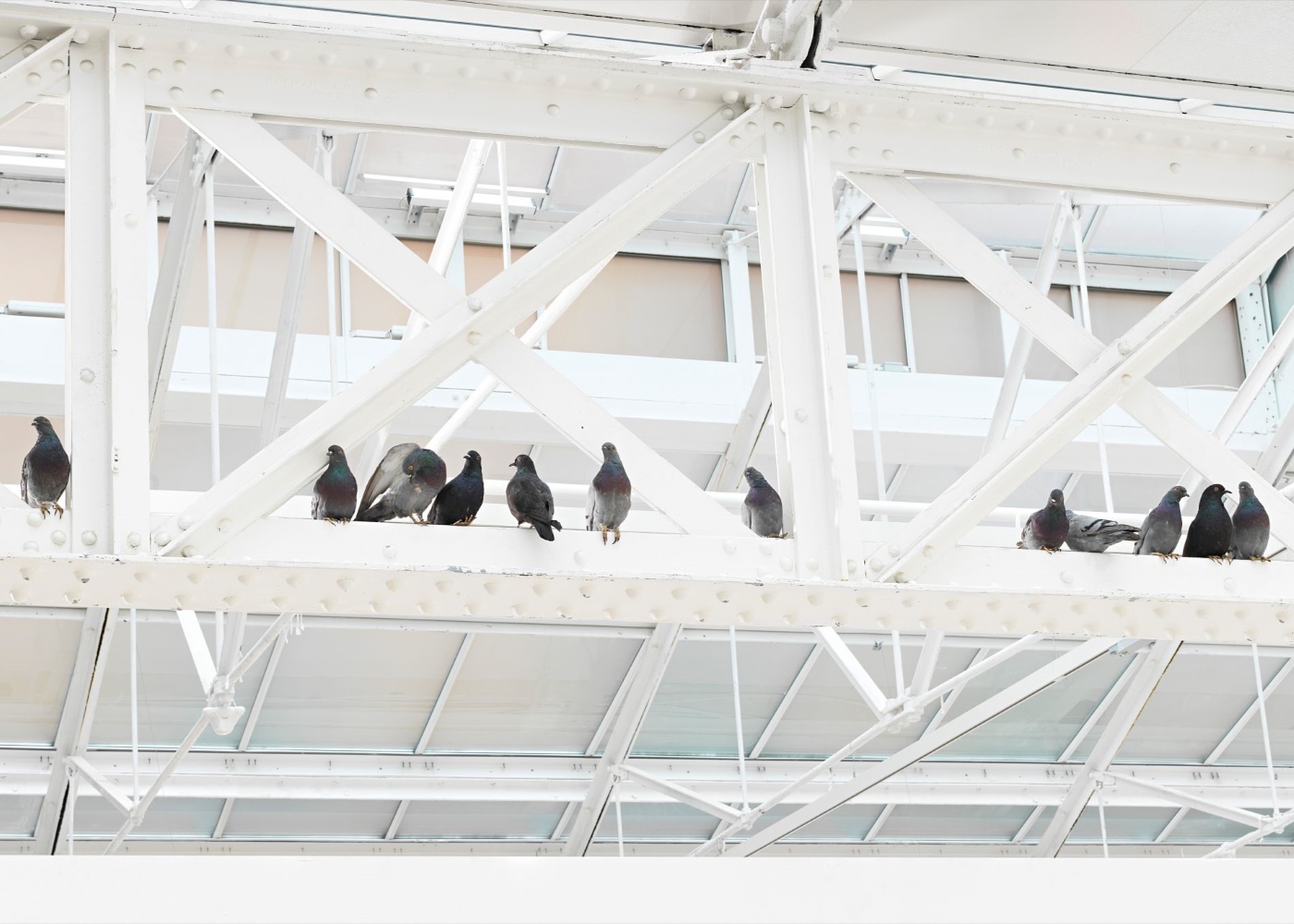
Humor is evident in the artworks discussed so far, and a contemporary artist whose career is defined by humor and cynicism is Maurizio Cattelan. The Italian artist is known in the art world for his conceptual and humorous sculptures. In 1997, he presented at the Italian Pavilion of the Venice Biennale two thousand taxidermied pigeons perched high on ventilation pipes and beams. The first sight visitors encountered were pigeon droppings staining the pavilion floor and the artworks displayed there; upon looking up, they saw thousands of pigeons above them.
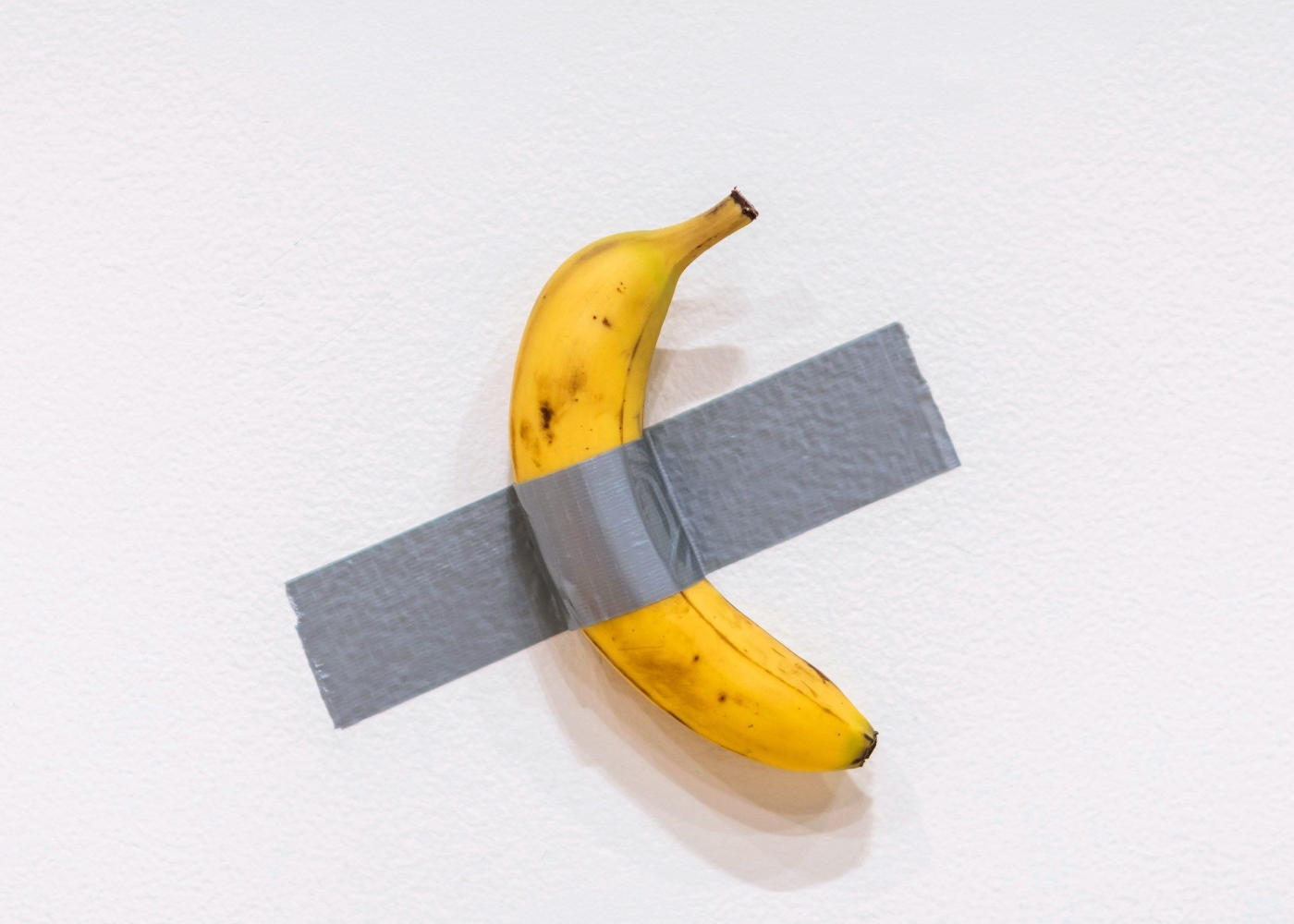
However, Cattelan became widely known when he taped a real banana to a wall at Art Basel Miami in 2019, which he titled Comedian. The artwork later sold at auction for around $6 million. Much like Duchamp’s Fountain, Cattelan’s Comedian broke the boundaries of what defines art and sparked extensive discourse in the art world and beyond.
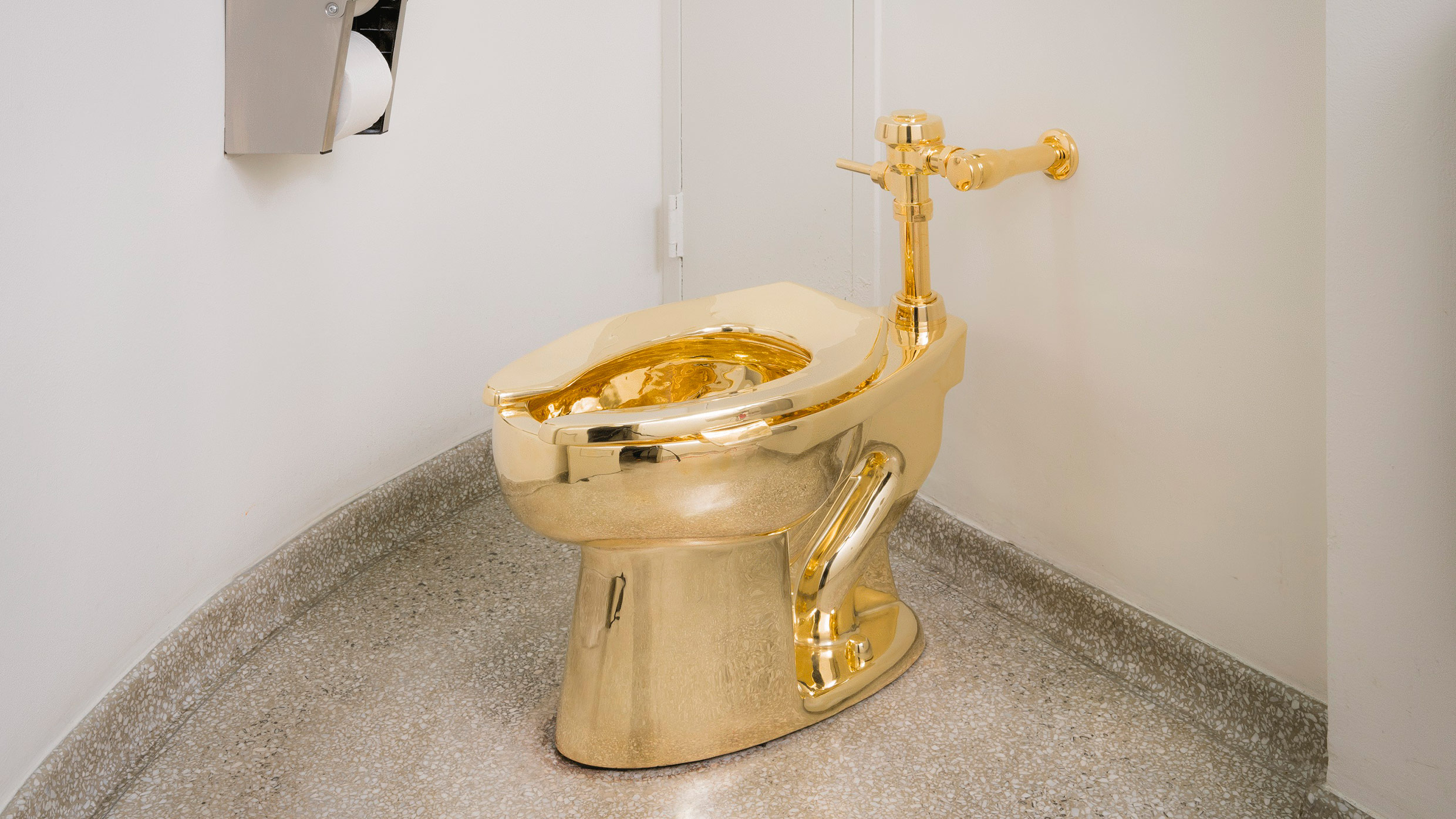
In 2016, Cattelan installed America at the Guggenheim Museum in New York – a toilet cast in solid gold. The toilet was not merely a sculpture; it was functional, and museum visitors queued to “visit” it. The artwork has been interpreted in many ways, for example, as a commentary on the common denominator of all people, whether rich or poor, whom must all use the bathroom, especially in a world where inequality is increasingly central to public discourse. Cattelan described the artwork as “one-percent art for the ninety-nine percent.” Alternatively, it may comment on the art world itself and the “need” for art: the process of creation and its product are as essential to artists as any natural necessity, and to society, which requires culture to form a genuine identity.
Maurizio Cattelan, America, 2016, gold, 46x38x64 cm
In 2016, when America was installed, Donald Trump was elected President of the United States, prompting comparisons between a golden toilet and the incoming president. The Guggenheim Museum even offered to loan the sculpture to the White House instead of a Van Gogh painting that had been requested (at Trump’s insistence that he should have a Van Gogh in the presidential residence).
Cattelan spares no means in conveying his message. The message was received, and America was later sold at auction for approximately $12 million.
The Bathroom as an Artistic Space
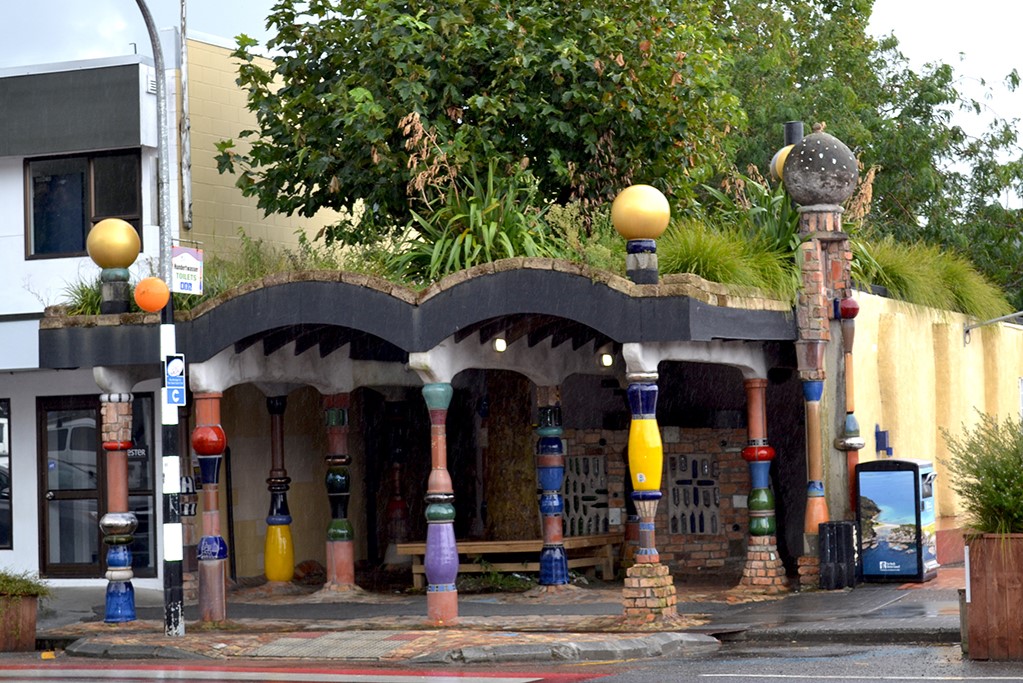
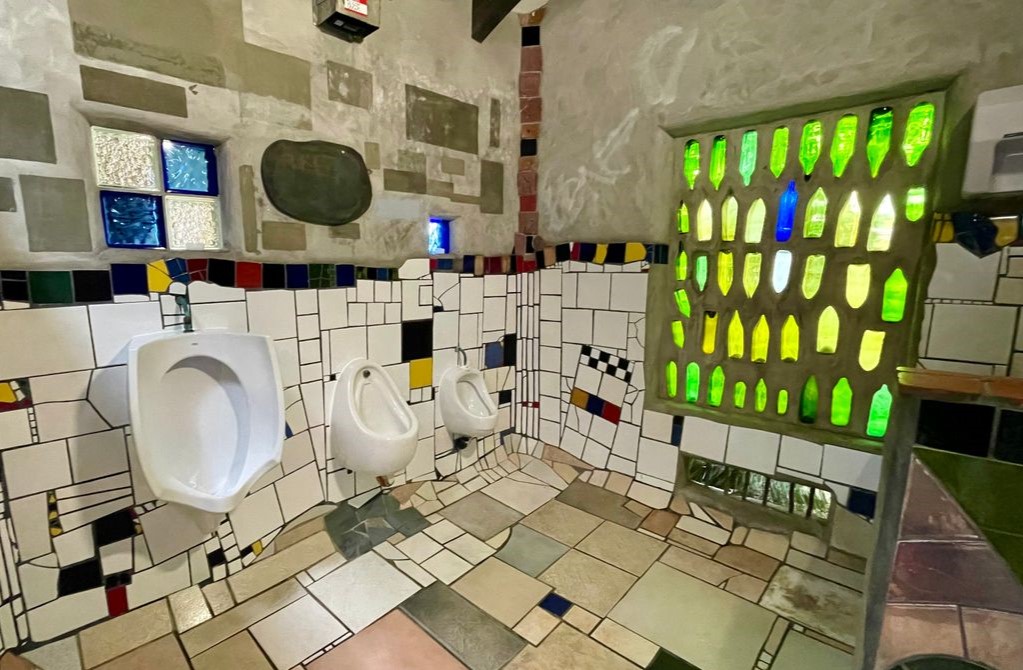
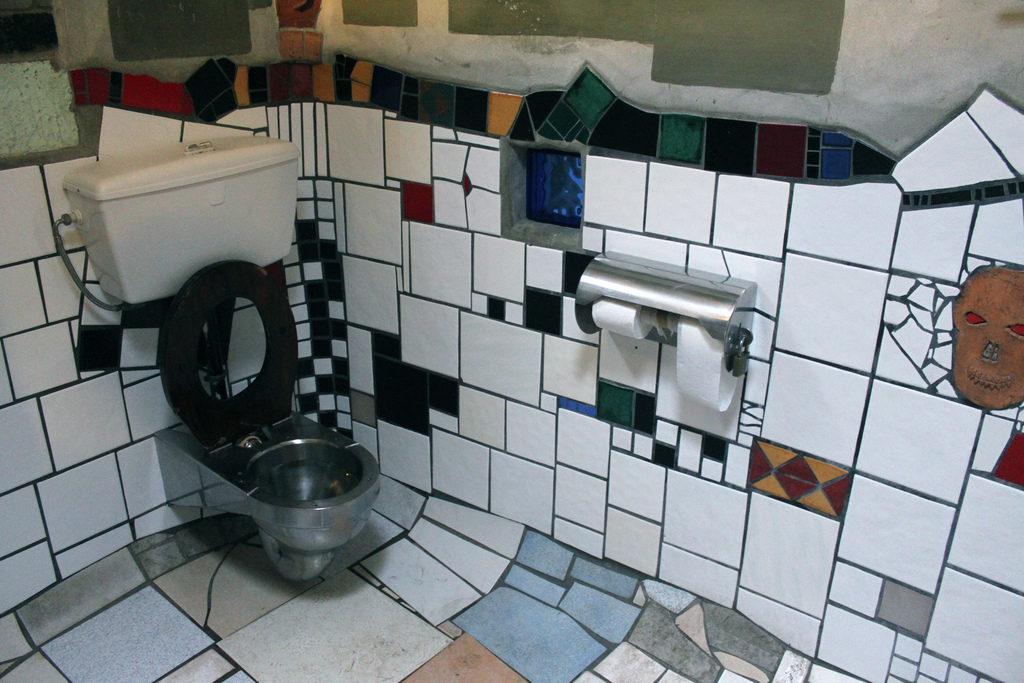
Kawakawa is a small mining town in northern New Zealand with about 1,500 residents, and yet it is home to the remarkable public toilets designed by Austrian artist and architect Friedensreich Hundertwasser. The artist settled in the town in 1975 and lived there until his death in 2000. A year earlier (1999), the toilets he designed were opened. Originally, the site was a plain concrete public restroom, but local residents approached the legendary Hundertwasser, already their neighbor, to transform the dull facility into an important site and landmark in New Zealand.
Not only were the toilets public, but the project itself was communal. Although Hundertwasser designed it, all the town’s residents participated: builders, contractors, and even the materials were local, such as bricks taken from an old bank building and stained glass made from recycled bottles. The structure is characterized by Hundertwasser’s colorful mosaic style, including a roof planted with local trees and shrubs, integrating the building into its environment, even ecologically. Since opening, the toilets have become famous, and despite being a functional structure, tens of thousands of visitors come to see them- like a museum.
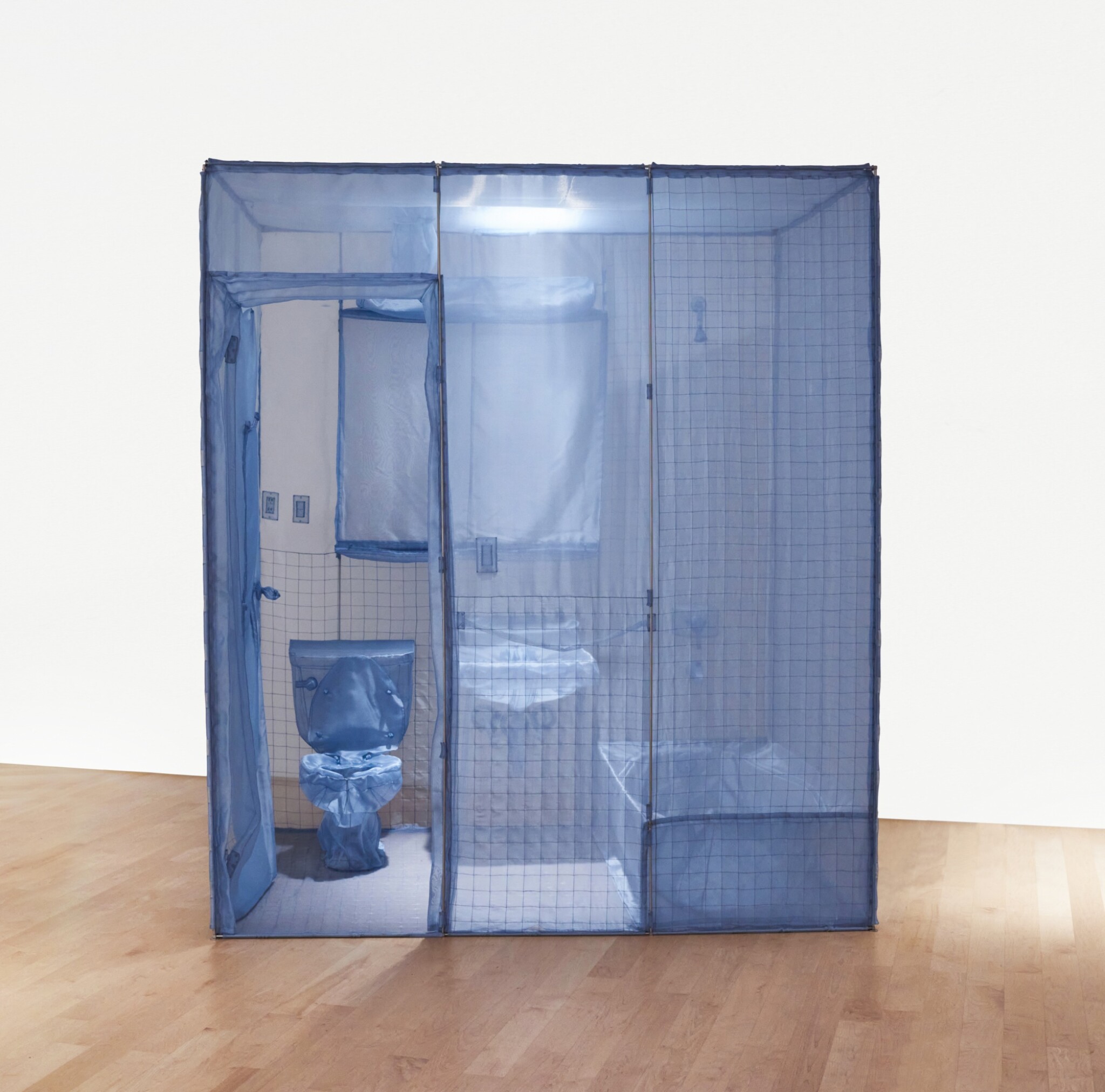
Do Ho Suh (South Korea, b. 1962) is an artist of memory. He is known primarily for his architectural artworks, especially large-scale installations of living spaces, homes and rooms, made of delicate fabric mesh, sewn together and reinforced with wire, through which he creates intricate, miniature details. Through these and other techniques, Suh creates “memory images” of spaces from his life, embedding them not only in his own memory but also in ours, as a physical object.
In his artwork Bathroom,348 West 22nd Street, Apartment A, New York, NY 10011, Suh reconstructs the bathroom of his New York apartment. After carefully measuring the space and every detail – from light switches to door hinges, he recreates the room using semi-transparent blue nylon fabric. The precision and details turn the encounter into a mirage; the almost transparent material creates a surreal sensation, half reality, half imagination. The choice of a bathroom bridges Suh’s personal memory with our collective memory, allowing us to perceive the generic room as both familiar and intimate.
Do Ho Suh, Bathroom, 348 West 22nd Street, New York, NY 10011, USA, 2003, translucent nylon and metal rods, 244x188x150 cm
The Urinals at the Tel Aviv Museum
Let’s Return to Landoy’s painting; at first glance, its painterly qualities are evident: the reflections of the ceramic tiles, the composition, and the lines that draw the eye toward the center, as well as the color contrast between the golden tones of the wall and floor against the white of the urinals and the opposite wall. All these serve the central idea of the museum series- the question Landoy poses about whether he has a place within the halls of national culture and art museums. Landoy paints from the outside inward, from a voyeuristic and distant perspective. Most spaces are devoid of people, except for a guard or the faint presence of distant visitors. Landoy also challenges the concept of the cultural hall by incorporating the museum’s urinals into his series exploring museum spaces and cultural heritage – “even the Queen of England goes to the bathroom”.
When I asked Meidad why he chose urinals specifically, he replied: “Duchamp’s urinal immediately came to mind. Here I thought, his is a single urinal, why not paint four?” Landoy asks: if one could place a urinal in a museum, can one place a painting of urinals, especially if I painted them?
In this painting, Landoy expresses social critique, institutional satire, humor, an exploration of everyday spaces, and an attempt to challenge the viewer. He succeeds in condensing the vast history on the subject into a single painting, deepening it and connecting it precisely to his unique style.