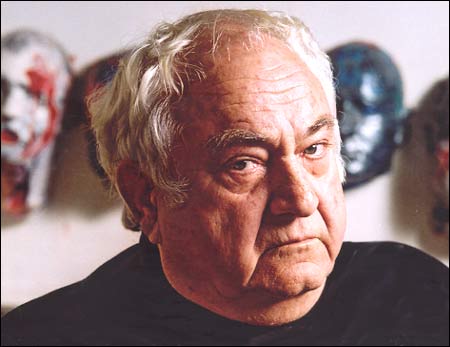
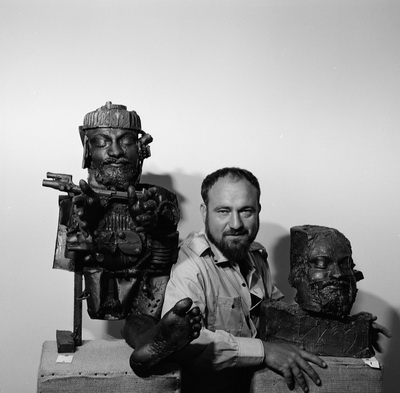
Igael Tumarkin was born in 1933 as Peter Martin Gregor Heinrich Hellberg, in Dresden, Germany. His mother, Bertha Gurevitz, was Jewish, while his father, Martin Hellberg, was a German-Christian director and actor. In 1935, Tumarkin immigrated to Israel with his mother, who remarried Herzl Tumarkin.
In 1954 he studied sculpture with Rudy Lehmann in Ein Hod for about a year. His studies focused on shaping characters and forms detached from both realistic-academic approaches and avant-garde approaches. In 1955 Tumarkin traveled to East Germany, where he worked as a set designer-intern in the Berliner Ensemble, Bertolt Brecht’s Theater, and served as an assistant to the artist Karl Von Appen. In 1956 he emigrated to West Germany and later to the Netherlands. In the late 1950’s Tumarkin lived in various places in Europe and especially in the Netherlands and France, where he was exposed to the Dada movement, pop art, French avant-garde and metalwork by Julio Gonzalez. Under their influence he started to formulate the assemblage concepts of his work.
In 1960 he returned to live in Israel. In 1962 he traveled to Japan and the United States to learn Japanese painting techniques. Tumarkin’s work has undergone various incarnations over the years, while adopting new materials and motifs. His works from the 1960s made use of weapons and other materials, which were processed into assemblages and other sculptures with an anti-war dimension. Beginning in the 1970s, his works began to feature quotes from art history, alongside images drawn from Palestinian and Bedouin folk art. These have often been used as a framework for political protest. During the Yom Kippur War, Tumarkin accompanied IDF forces as a photographer and military correspondent.
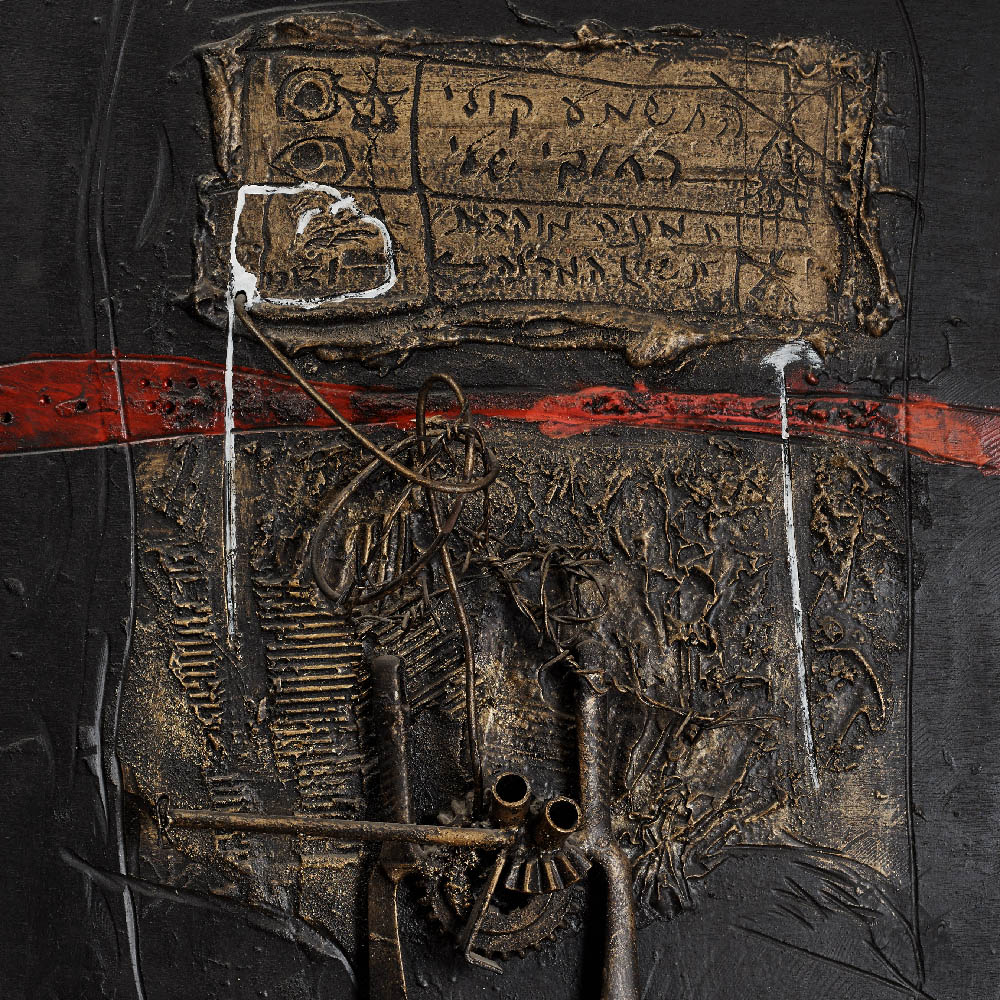
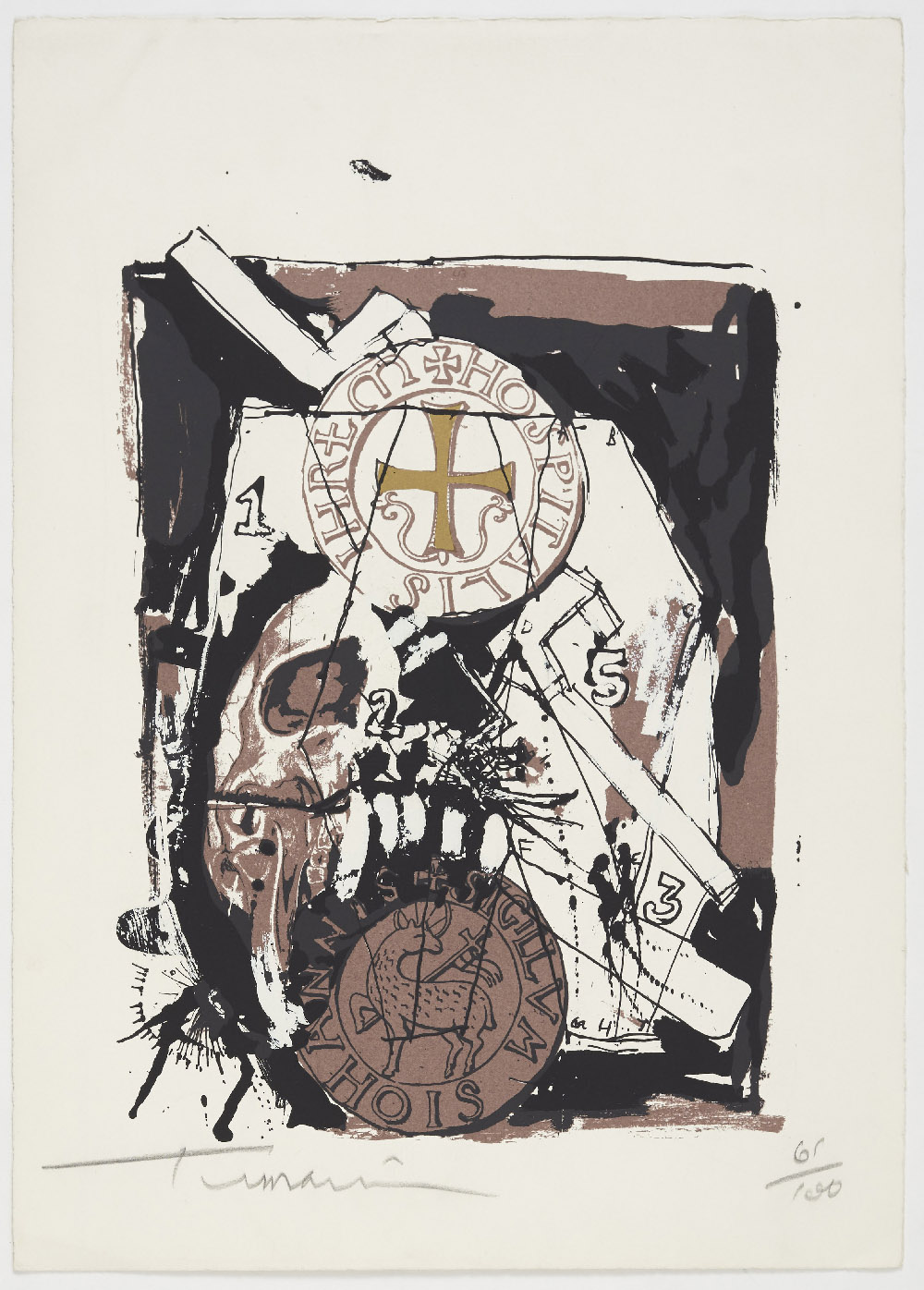
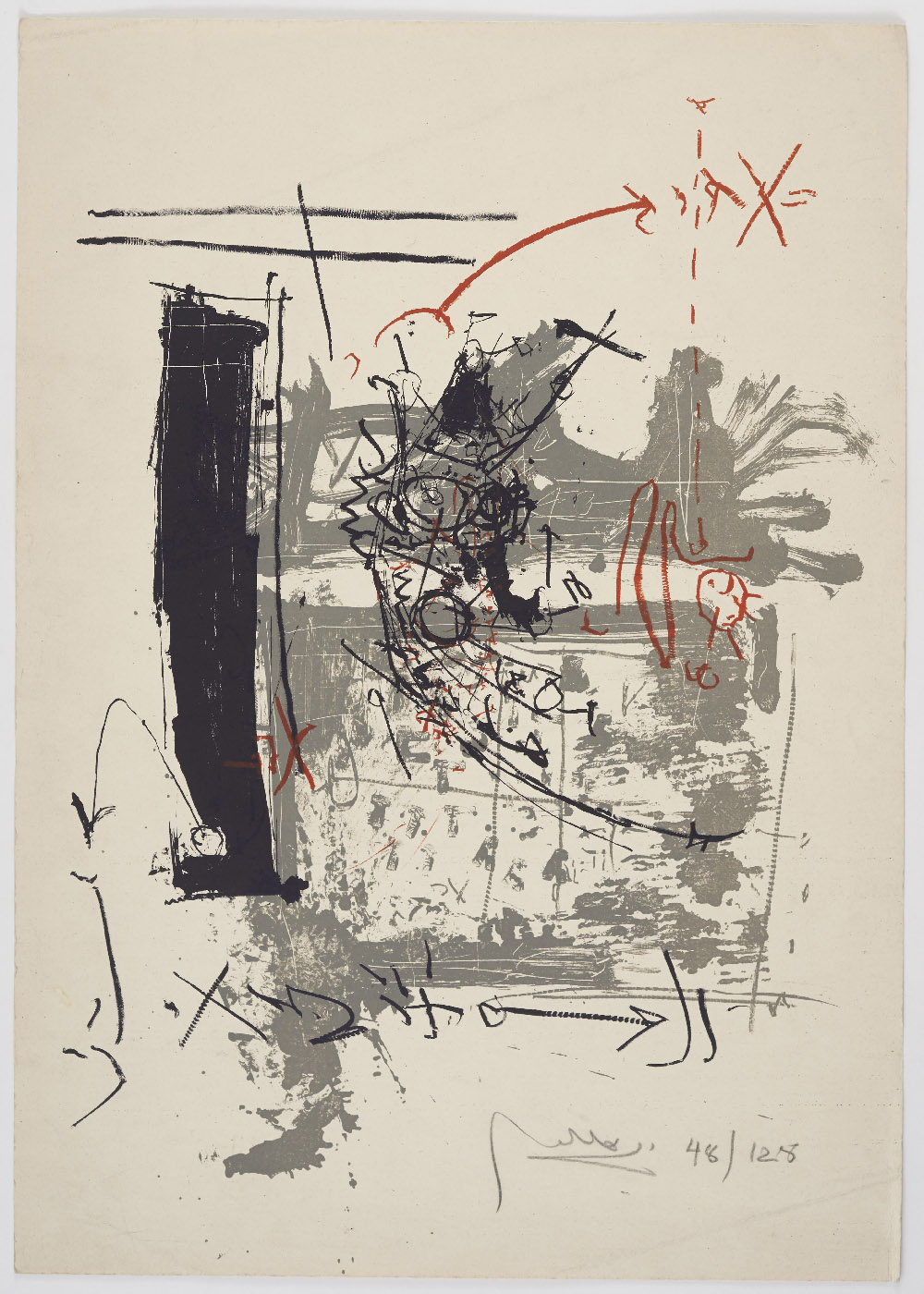
In addition to his main occupation in sculpture, Tumarkin also created other media such as print, painting and photography. Alongside small works, Tumarkin have placed many statues and monuments throughout Israel, often in desert or rural areas. His paintings and sculptures regularly contain lyrical images and motifs of high European culture, contrasted with blatant expressive language, with weapons, and with images of mental and physical vulnerability.